
Detective Chief Inspector Matthew James Kehoe joined the NSW Police Force on 18 September 1987 and served at Dee Why, Manly and Frenchs Forest police stations. In 1995, he commenced criminal investigation duties at Manly Police Station and was designated as a detective in 1997.
Work Across Northern New South Wales
His career later included a transfer to the Corrective Services Investigation Unit within State Crime Command, before promotion to sergeant at Lismore in 2005. He also performed duties across northern New South Wales, including a period as general manager of Industry Regulations at the NSW Firearms Registry.
Tweed/Byron Role And Current Posting
In 2018, he transferred to the Tweed/Byron Police District as a duty officer and was promoted to detective chief inspector in 2019. At the time of the award, he was the officer in charge of the Byron Bay Police Station, performing the role of an operations district inspector.
His award documentation notes sustained engagement with locals, community groups, and business owners within the tourism industry, contributing to public confidence and collaboration. It also records his support for the family of a missing Belgian backpacker.
The award record further outlines his role in planning, commanding and leading policing operations at Bluesfest, Splendour in the Grass and Falls Festival in the Byron Shire from 2018 to 2024. It also notes his response during the 2019 bushfires and the 2022 floods, as well as his leadership of public order management at the NSW–Queensland border, Byron Bay and Mullumbimby during COVID-19 restrictions.
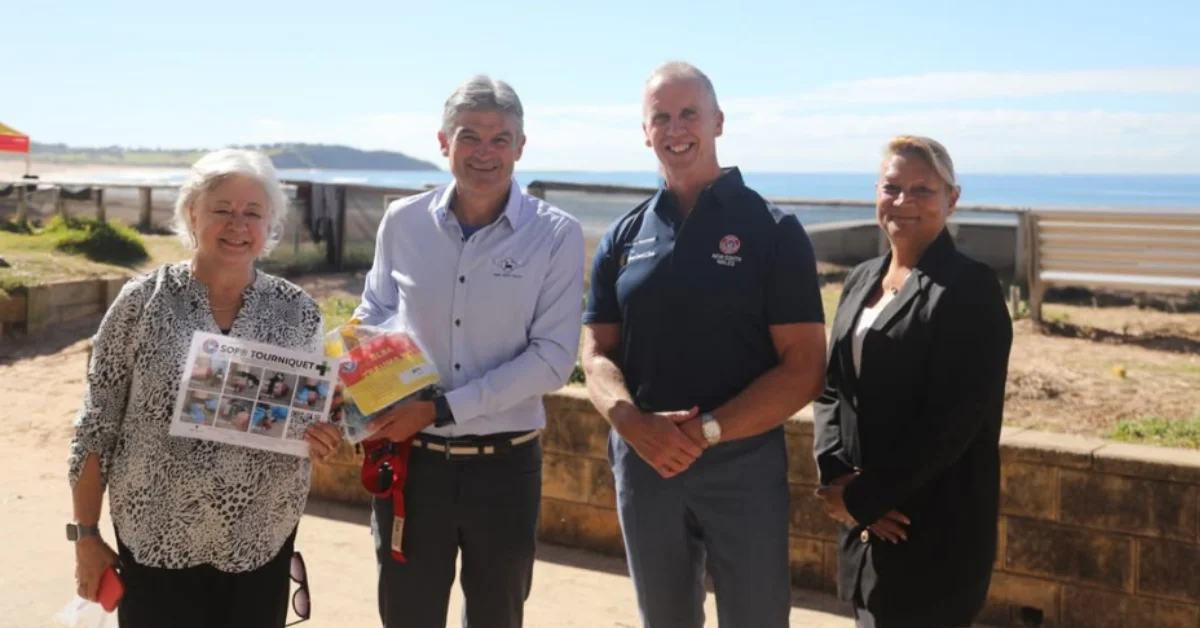
Detective Chief Inspector Kehoe was awarded the Australian Police Medal on 26 January 2026, recognising 38 years of service and contribution to the NSW Police Force.
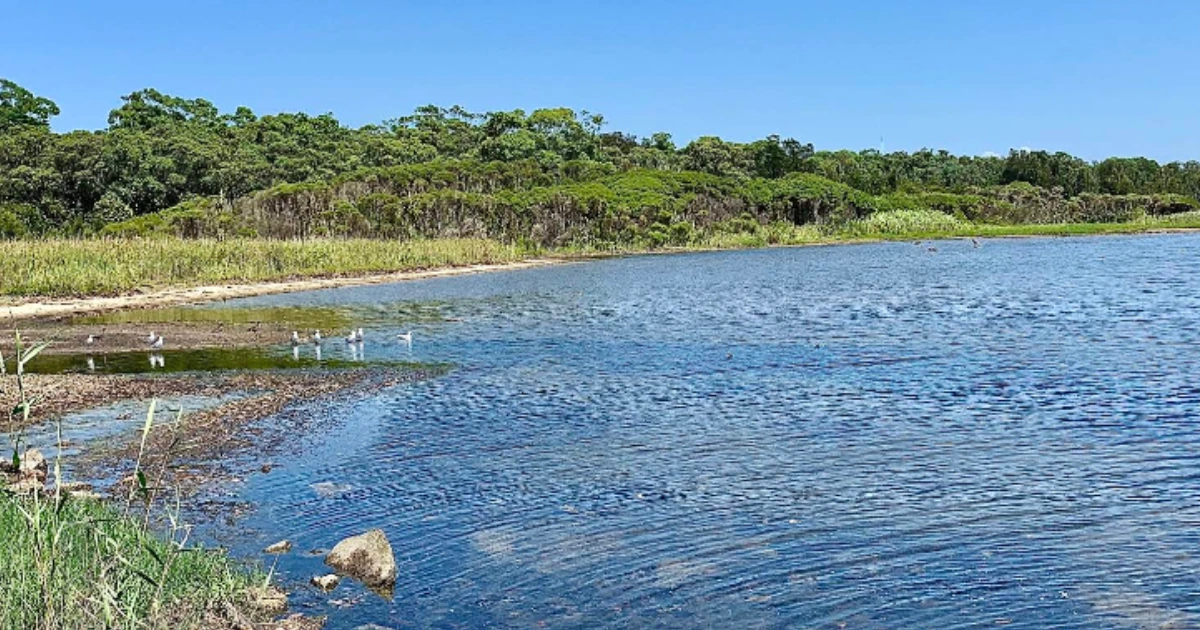
Dee Why black swans are thriving at the lagoon this summer, with fluffy cygnets marking the continued return of a species that once abandoned the waterway but now symbolises the suburb’s environmental recovery.
The downy youngsters have been spotted paddling around the lagoon with their protective parents, making the most of calm conditions while the water was closed to the public until the middle of January. For Dee Why residents, seeing Dee Why black swans raise their young at the lagoon represents decades of environmental restoration work finally paying off.
From Abandonment to Recovery
Dee Why black swans were once so numerous at the lagoon that the bird became embedded in local identity. Early 20th century, photographs captured 24 black swans on the water at once, enough that local organisations including Dee Why Public School, the bowling club and surfing fraternity all adopted the black swan as their emblem.
By the end of 20th century, the swans had completely abandoned Dee Why Lagoon. Unhealthy water quality, a silted bottom and rubbish-strewn foreshore made the habitat unsuitable for the native species that had defined the area for generations.
The turnaround came through consistent effort. Volunteers from Friends of Dee Why Lagoon worked alongside dedicated restoration specialists to clean up the waterway. Black swans began returning to Dee Why Lagoon, just as they returned to Narrabeen Lagoon after similar restoration work.
A Painted Swan That Brings Good Luck
The black swan’s importance to Dee Why lives on in an unusual local tradition. Sometime in the 1920s, someone painted a black swan on the footpath outside 103 Howard Avenue. That painting became a neighbourhood icon with special meaning—stepping on the painted swan brings bad luck.
Over nearly a century, anonymous artists have kept the tradition alive by repainting the swan whenever it fades. The most recent refresh happened in 2020, when the swan was carefully restored onto newly replaced pavement. The painting has grown over the years, now spanning two paving stones instead of one.
Worn grass on either side of the painted swan hints at how seriously locals take the superstition. Residents and visitors alike carefully step around the artwork, maintaining a tradition that connects modern Dee Why to its environmental heritage.
Both the painted swan and the lagoon catchment area appear along the Dee Why Heritage Walk, a 3.5 kilometre loop showcasing the suburb’s architecture, art, memorials and natural landmarks.
Protecting the Newest Generation
The current clutch of cygnets hatched under ideal conditions. With the lagoon temporarily closed, predators stayed away and rough water couldn’t threaten the vulnerable chicks. The parent swans—which pair for life and form strong bonds—have been teaching their young to navigate the local environment.
Anyone spotting the fluffy grey cygnets should keep their distance. Parent black swans actively defend their offspring from any perceived threat, no matter how well-meaning the approach might be.
The chicks are thriving thanks to the collaborative efforts of local Bushcare volunteers and dedicated beach and waterway monitors. These groups work together to maintain the wetland environment that now supports breeding black swans once again.
Photo Credit: Friends of the Dee Why Lagoon/Facebook
Success at Dee Why Lagoon shows what’s possible when communities commit to environmental restoration. The sand dune separating the lagoon from the ocean tells a similar story—once almost bereft of vegetation, it now supports dense native growth that stabilises the dune and provides habitat for local birds.
For Dee Why residents who remember when black swans were absent from the lagoon, watching new cygnets paddle through the water represents more than just a pleasant summer sight. It confirms that environmental recovery, while slow, delivers lasting results.
In Dee Why, the next painful sprain, sudden fever or nasty cut no longer has to default to an emergency department trip, with a nearby Medicare Urgent Care Clinic set up to handle urgent problems that aren’t life-threatening and to keep locals moving through care sooner.
The Australian Government published the announcement about the Chatswood and Dee Why Medicare Urgent Care Clinics on 17 January 2026, naming the Dee Why service location as 10 Dale Street, Brookvale, with extended hours seven days a week, no booking needed and all care bulk billed.
For Dee Why residents, the main change is having a practical, local alternative when the issue feels urgent but does not require an ambulance. The clinic is designed to sit between a regular GP visit and a hospital emergency department, giving people a place to be seen promptly for common problems such as minor injuries and short-notice illness.
Where People Will Actually Go
Sydney North Health Network’s listing for the Dee Why Urgent Care Clinic places it at 10 Dale Street, Brookvale NSW 2100 and describes it as bulk billed with walk-in access, and includes a clinic phone number plus an Urgent Care Triage Line for advice before heading in.
The operator’s public information page says the service is based within the Warringah Medical & Dental Centre and advertises daily opening hours from 8am to 8pm, reinforcing the “no appointment” model for non-life-threatening conditions.
Why Health Services Want People to Use this Service
Health messaging around the urgent care clinic network focuses on reducing low-acuity emergency presentations so hospital teams can concentrate on severe cases.
A Prime Minister’s Office release from December 2025 cites NSW Bureau of Health data showing semi-urgent emergency presentations down 5.1 per cent and non-urgent presentations down 8.7 per cent across NSW, presenting this as evidence that urgent care clinics are diverting appropriate patients away from emergency departments.
The clinic’s opening frames the Dee Why clinic as part of easing demand pressures tied to Northern Beaches Hospital by redirecting cases that do not require emergency-level resources. The impact is intended to be fewer hours spent waiting in hospital corridors for issues that can be treated safely in a dedicated urgent care setting, particularly on weekends and after hours.
A shark encounter at Dee Why has reinforced expert warnings that summer conditions can increase the likelihood of bull sharks moving closer to shore, particularly after heavy rain.
Dee Why Beach closed for at least 24 hours after a shark took a bite out of an 11-year-old boy’s surfboard at Dee Why Point on Monday, 19 January.
Lifeguards were alerted around midday and sounded a shark alarm, with signs erected to warn beachgoers. The boy was assisted back to shore by other surfers and his father and was unharmed.
Photo Credit: Australian Museum
What Was Reported At Dee Why
The incident involved a shark estimated at about 1.5 metres, with the surfboard showing a missing section described as roughly 10–15 centimetres.
The shark was thought to be a juvenile bull shark. No further sightings at Dee Why were reported after the initial alert.
Why Experts Say Risk Is Higher Right Now
Expert commentary across the sources pointed to a “perfect storm” of seasonal and environmental factors that can increase shark activity close to swimming and surfing areas.
Warm summer water is linked to bull sharks frequenting harbours and near-shore zones for longer periods, while heavy rain and runoff can create brackish, low-visibility water. Those conditions can also shift fish and other food sources toward coastal areas, drawing predators closer.
Experts cited in the sources warned that risk can remain elevated while water stays turbid after significant rain. One assessment suggested it can take up to a week for water to clear, while other warnings urged people to stay out of the water for at least the next week and potentially longer if conditions persist.
Safety Advice Emphasised In The Sources
Expert advice consistently focuses on avoiding murky water, staying clear of river mouths and areas where bait fish may gather, and using netted swimming enclosures where available.
Beach monitoring measures included drone surveillance and on-water patrols used to scan for shark activity and assess conditions.
The Dee Why incident occurred during a period described by experts as peak bull shark season, with warm water and recent heavy rain combining to increase risk in near-shore, low-visibility conditions. Monitoring and closures were expected to continue until conditions improved.
An 11-year-old boy surfing at Dee Why Beach had a close call with a shark on Monday morning when the marine animal bit his surfboard multiple times at the southern end of the beach.
The young surfer managed to escape without injury and made it safely back to shore, despite his board sustaining several bite marks during the incident.
According to a Surf Life Saving NSW spokesperson, the beach had already been closed to the public due to hazardous water conditions at the time of the attack. The closure is expected to remain in place for up to 48 hours following the incident.
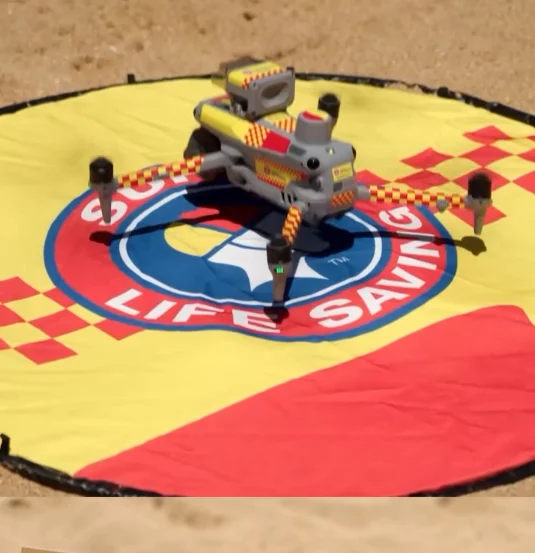
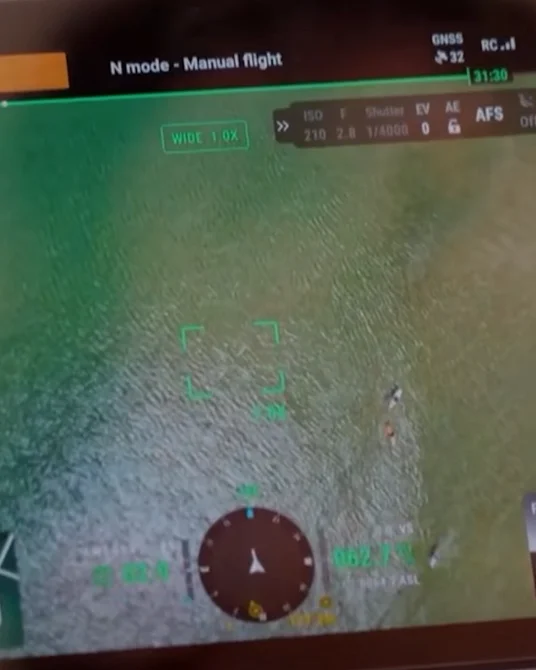
Surf lifesavers responded immediately after the boy reached the shore, deploying a drone to monitor the waters around Dee Why Beach for any signs of shark activity.
The species of shark involved has not yet been confirmed. A section of the damaged surfboard has been sent to NSW Fisheries for analysis, which may help identify what type of shark was responsible for the attack.
The Manly Observer reported that witnesses believe they spotted a bull shark measuring approximately four to five feet in length, though this sighting remains unconfirmed by authorities.
The Dee Why incident occurred just one day after a separate shark attack at Nielsen Park in Vaucluse, where a 13-year-old boy was mauled shortly after entering the water at Shark Beach around 4.20pm on Sunday.
The teenager remains in hospital in critical condition. NSW Police Superintendent Joseph McNulty commended the brave actions of the victim’s friends, particularly one who jumped into the water to help pull the injured teen to safety, describing the rescue effort as “heroic”.
That beach also remains closed, with authorities advising the public to avoid swimming in harbour waters for the time being.
Conditions at Dee Why have improved, with most seaweed clearing from the beach following a recent surge linked to large ocean swells along Sydney’s coast.
As of January 13, observations at Dee Why Beach indicate that nearly all seaweed has cleared from the shoreline. Swimming conditions were reported as favourable, with water temperatures at approximately 22°C.
The improvement follows several days where kelp had accumulated across sections of the beach, reducing usable sand and producing strong odours during hot weather.
What Led To The Seaweed Surge
The earlier build-up occurred after large swells over the New Year period dislodged offshore kelp beds. Seasonal growth through spring increased the amount of kelp available to be washed ashore once wave activity intensified.
Similar conditions were reported across multiple Sydney beaches during this period.
Photo Credit: Gaida Rodgers/Facebook
How Dee Why Responded
At Dee Why, the seaweed was left to break down and move naturally. Information published by Northern Beaches Council states that seaweed plays a role in sand recovery and supports coastal ecosystems.
Wave action and tides have since redistributed much of the kelp without mechanical removal.
Photo Credit: Gaida Rodgers/Facebook
Different Outcomes Elsewhere
Other Sydney beaches experienced different outcomes. In some locations, seaweed was removed where beach size or access was limited. These decisions varied depending on local conditions and volume.
The latest conditions at Dee Why reflect a return to normal beach use following a short-term seaweed surge. Natural coastal processes have largely resolved the accumulation as ocean conditions stabilised.
A 64-year-old man remains in a critical condition after falling approximately six metres from an apartment balcony onto a shop roof in Dee Why’s main shopping precinct last night.
Emergency services were called to Oaks Avenue just before 8.00pm on Monday evening following reports of the fall from a four-storey apartment building.
The man’s family members witnessed the incident, and distressed neighbours who heard calls for help looked down from their balconies to see him lying on the corrugated metal roof, covered in blood. Despite his injuries, the man was conscious and able to respond when neighbours called out to him, though he appeared confused and could not move.
The scale of the emergency response reflected the severity of the incident, with five NSW Ambulance crews dispatched to the scene, including Intensive Care Paramedics, Special Operations Paramedics and NSW Ambulance Inspector Kylie O’Brien. Multiple units from Northern Beaches Police Area Command and Fire and Rescue NSW crews from Dee Why, Narrabeen and Manly stations also attended.
First responders arrived within five minutes but faced the challenge of accessing the injured man on the roof. Neighbours continued to relay information about his condition to emergency workers below, confirming he remained conscious and breathing.
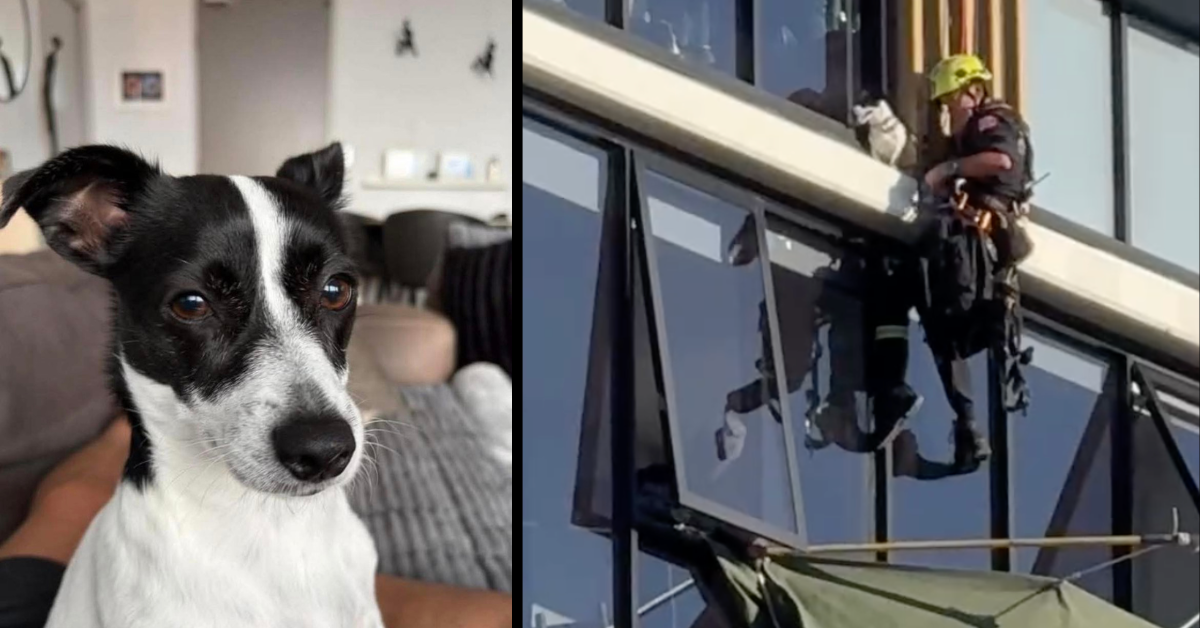
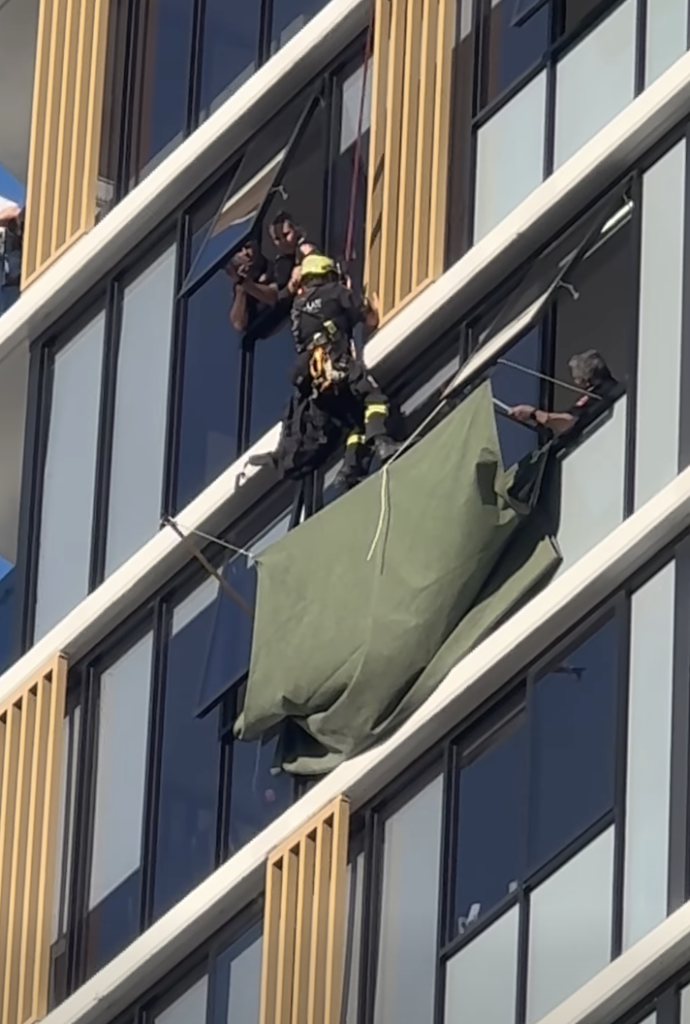
Firefighters arrived less than ten minutes after the initial emergency call and used an extension ladder to reach the man. They found him with a suspected broken right leg and a significant head laceration that was bleeding heavily. The man, who had reportedly been cleaning at the time of the fall, informed rescuers he was taking blood-thinning medication, which heightened concerns about controlling the bleeding.
The Toll NSW Ambulance Rescue Helicopter was dispatched from Bankstown, landing at Beverley Job Park in Narraweena shortly after 8.30pm. The aeromedical team, comprising a specialist trauma doctor and critical care paramedic, was escorted to the scene by police.
Firefighters carefully secured the man in a stokes litter and used a ladder slide technique to move him from the shop roof to a neighbouring apartment, where paramedics and the medical team were waiting. Given the height of the fall and concerns about potential internal injuries and bleeding, the medical team made the decision to place the man in an induced coma.
He was transported by road to Royal North Shore Hospital shortly after 9.15pm in a critical condition.
Police and emergency services responded to several incidents across Dee Why in the final days of December, according to reports received by authorities.
Disorderly Behaviour
Just after 1.00am on Saturday, 27 December, NSW Police received a report of a group of disorderly youths gathered near Howard Avenue, Dee Why.
Shortly before 10.00pm on Sunday, 28 December, police received a report of a group of intoxicated youths gathered near Pittwater Road, Dee Why.
Assault Reports
Shortly before 2.30pm on Saturday, 27 December, NSW Police were called to a report of a fight at Pacific Parade, Dee Why.
Later that same day, shortly after 7.00pm, police responded to a report of a person assaulted at Pittwater Road, Dee Why.
Just after 10.30pm on Wednesday, 31 December, NSW Police were called to a report of a person assaulted at St David Avenue, Dee Why.
Traffic and Injury Incident
Shortly before 6.00pm on Tuesday, 30 December, NSW Police and NSW Ambulance responded to a report of a pedestrian struck by a van on Pittwater Road, Dee Why, near Howard Avenue. Paramedics treated the pedestrian, a man in his 50s, for abrasions and a head laceration before transporting him to Northern Beaches Hospital in a stable condition.
Police observed the driver of the van pretending not to speak English when officers explained the right of way for pedestrians crossing at traffic lights.
Fire Response
Just after 5.00pm on Wednesday, 31 December, Fire and Rescue NSW Narrabeen Station responded to a report of a fire at Westminster Avenue, Dee Why. Firefighters identified the source of smoke as unattended cooking inside a unit.
Police and emergency services responded to the above incidents as they were reported during the late December period.
Residents in Dee Why have turned out in large numbers to support blood donation efforts, as Lifeblood worked to meet urgent hospital demand following the Bondi attack.
Hospitals across Sydney faced immediate and significant pressure after the Bondi attack, prompting Lifeblood to issue urgent appeals for blood donations. Emergency-use blood types, particularly O negative, were identified as critical for trauma care, where patient blood types are often unknown.
The surge in demand led to increased activity at donation centres across the city, including mobile services operating in Northern Beaches suburbs.
On Monday, 15 December 2025, the mobile Lifeblood donation truck operating in Dee Why reached full capacity. Staff at the site reported they were unable to accept additional walk-in donors due to the volume of people attending.
Throughout the morning, residents continued to arrive at the Dee Why site seeking to donate. By lunchtime, the truck was displaying a closed sign, with people still gathering nearby to show support and enquire about future availability.
Booking Disruptions And Service Strain
Due to heightened demand, Lifeblood encouraged donors to book appointments rather than attend without one. The organisation’s website experienced outages caused by high traffic, while phone lines were also heavily congested.
People wishing to donate were advised to try again later or contact Lifeblood by phone on 13 14 95, noting that delays were expected. To help meet demand in New South Wales, Lifeblood also transferred blood donations from multiple states.
The response extended beyond Dee Why, with Lifeblood reporting close to 50,000 people made appointments to donate blood nationwide on Monday. Within a 24-hour period, 7,810 donations of blood, plasma and platelets were recorded across Australia, marking a national record.
Lifeblood staff indicated the mobile donation service is expected to remain in the Dee Why area until Thursday, 18 December. Members of the public were encouraged to continue donating later in the week, with Lifeblood noting the need for blood would continue into next week and beyond.
Maria Psillakis has spoken publicly for the first time after her husband, Mercury Psillakis, died in a shark attack in Dee Why, calling for improved safety measures in the area.
Shark Attack in Dee Why Sparks Renewed Safety Focus
On 6 September, Mercury Psillakis was surfing with friends near Dee Why when he was fatally injured by a great white shark. He had been in the water for around half an hour and was approximately 80 metres offshore at the time.
The attack occurred two weeks before the patrol season began, and the shark alarm was not triggered for 45 minutes. Children were later seen swimming close to the site, heightening concerns about the response time.
Advocacy for Evidence-Based Protection
Maria Psillakis is urging improvements to shark detection and monitoring. She has highlighted that drones are operated only during the summer period in Sydney, and that the shark involved was untagged, preventing tracking through existing systems.
Her goal is to reduce the risk of similar incidents by pushing for broader use of evidence-based technology and coordinated safety discussions involving surf lifesaving groups, scientific experts and community representatives.
Photo Credit: Yannis Michalandos/Facebook
A Life Remembered at Dee Why
A paddle-out was held on 27 September, drawing around 1,500 participants who gathered in the water to honour Mercury’s life. His family described him as a devoted husband, father, friend and keen surfer with a deep passion for rare palms.
Mercury had a long history with surfing and community surf clubs, and that he was known for both his humour and his commitment to those around him.
Final Moments and Family Reflections
According to Maria’s tribute, Mercury alerted his friends to the presence of the shark shortly before the attack. She described him as vigilant in the ocean and focused on protecting others.
His family shared memories of their life together, including years of working side-by-side, his love for their daughter, and their choice to slow down after health challenges to prioritise time together.
Photo Credit: Yannis Michalandos/Facebook
Community Support for the Psillakis Family
Community support has been significant. Friends, surfers, school groups, palm enthusiasts and locals have offered help through tributes, attendance at the paddle-out, and personal contributions.
Maria expressed that the support from both close connections and strangers has brought comfort during a difficult period.
Maria intends to continue advocating for improved safety in Dee Why, aiming to minimise risk for ocean users and ensure that lessons from the incident contribute to more robust protection measures.