Sometime during the long lockdowns in mid-2021, Dee Why began to be treated to the chalk artwork of James Maltman, the creative person behind ‘Now Your Chalking.’ James initially drew interesting figures on the boring grey walls and streets outside his unit block to amuse his toddler.
But James also impressed several passersby in his neighbourhood, who enjoyed his creative doodles. This encouraged him to create more chalk artworks around the community and document everything on his Now You’re Chalking Instagram and Facebook accounts, where his followers have grown after a few months.
The young dad of two decided to do chalk art so he and his toddler, Freddy, could get outside of the house whilst his wife and newborn napped. The worthwhile activity not only bonded father and eldest son together but some of his Dee Why neighbours even ask him to draw their favourite characters.
The community also did chalk hunts to see where James has done his latest piece.
He also got to collaborate with another local artist for a mural with a distinctive Australian theme for New Year’s.
However, James and his family moved to Kellyville in late January 2022 for his job with a liquor retailer. He still keeps at it with his chalk art movement in The Hills Shire, where he plans to participate in street festival events.
James’ chalk artworks are often washed away when it rains or when the street cleaners do their jobs but heaps of his creations have actually been holding up in Dee Why, where people have been missing his new drawings.
They continue to follow his work on his social media pages.
Across Australia, chalk drawings and messages on the streets have given locals much joy amidst the pandemic stress. In some communities, kids draw chalk artworks together whilst getting a healthy dose of vitamin D outdoors and a mental health boost as they connect with other people without breaching social distancing rules.
Public health expert Lisa Gibbs of the University of Melbourne chalk artworks serve as a coping mechanism during the lockdowns and contribute to the neighbourhood’s beautification. Some of the adults say that creating chalk art is cathartic, beautiful, empowering and joyful — a positive experience all over.
Dee Why, deemed ‘not so desirable’ less than ten years ago, is now in high demand, with the median house price growing more than 35 per centand properties spending less than a month on market.
Dee Why Highlights
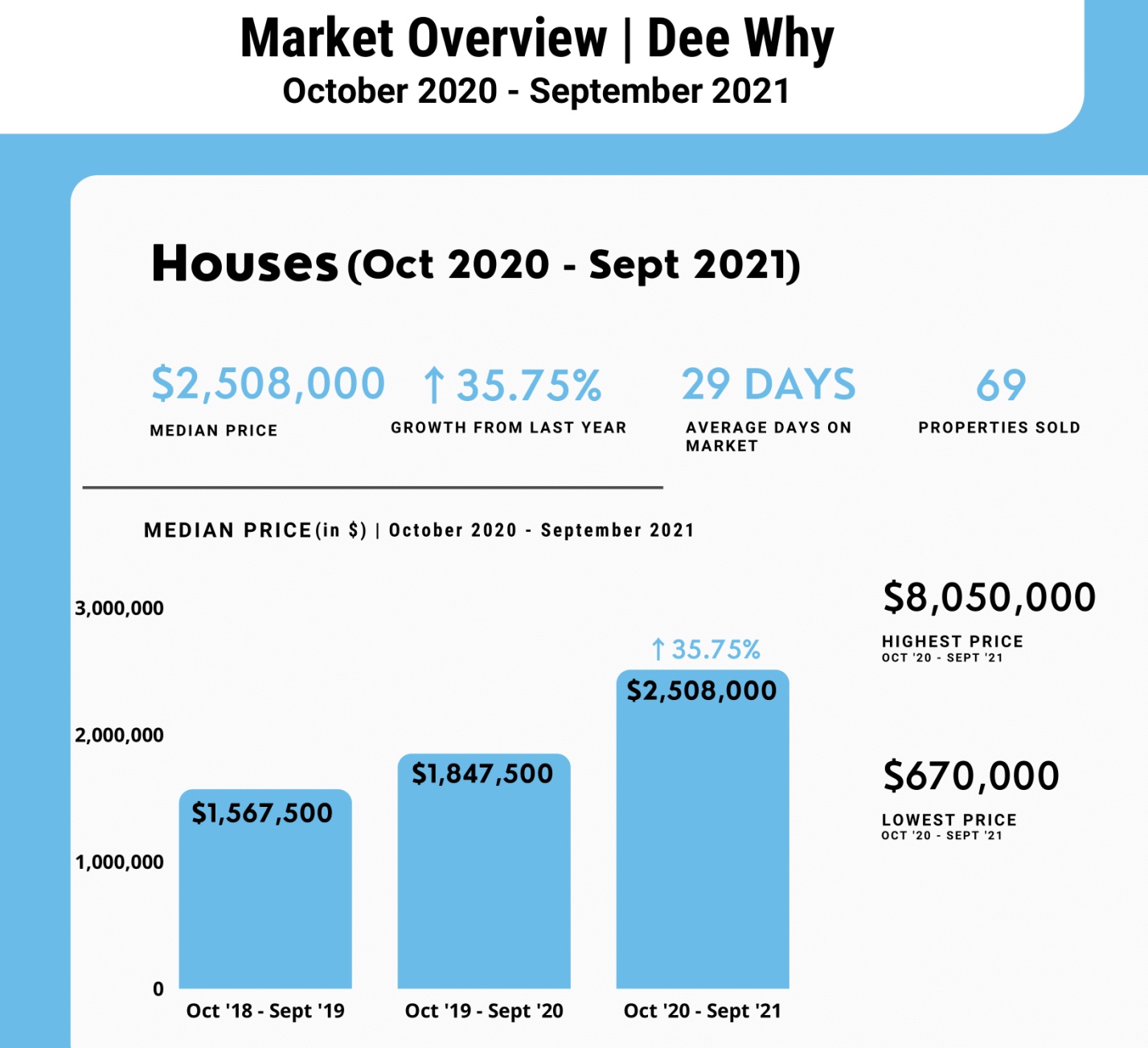
Dee Why’s median house price is now at $2,508,000 for the period October 2020 to September 2021, up 35.75 per cent from the previous period.
The unit market, which comprises more than half of the property stocks, also grew by 9.08 percent with the median price settling at $895,000.
Dee Why has the conveniences of cosmopolitan living and the beachside lifestyle, making it very attractive to numerous investors.
House Price Growth
From October 2020 to September 2021, Dee Why has enjoyed a reputation as one of the best performing housing markets in the Northern Beaches with an outstanding 35.75 per cent median house price growth.
The uptick has placed the median house price at $2,508,000, up from $1,847,000 in the previous year, per figures from Property Market Updates.
There were 69 houses sold for this period with an average of 29 days on market. Three-bedroom houses were most coveted but four and five-bedroom homes were also in high demand.
Dee Why is riding on the wave of increasing demand for houses in the Northern Beaches, which saw no house price falls during the pandemic. Investors have been flocking to the beachside due to its high liveability factor.
Whilst Dee Why might not be the most glamorous coastal location in Sydney, it remains very affordable for many buyers who opt to settle longer, some permanently, in the comforts of its enviable lifestyle.
Unit Price Growth
The unit market in Dee Why delivered a decent capital growth for buyers who were priced out of the top markets for this same period.
With Dee Why’s median house price jumping by nearly 40 per cent, unit buyers are also enthusiastically joining the market. The current median unit price is at $895,000.
This trend triggered a jump of 9.08 per cent with a whopping 640 units sold within an average of just 23 days on market, per figures from Property Market Updates. Coveted apartments are also selling faster than houses within this 12-month period as the market turns a corner post-pandemic.
Industry insiders said that units transactions are quicker as Sydney’s rental market improves. Despite the disruption during the pandemic, investors are slowly coming back, finding the right tenants (e.g. professionals), and cashing in on their investments.
In fact, more than half of the unit transactions closed in Dee Why from October 2020 to September 2021 were for two-bedroom units from single or working couples with a small family.
About Dee Why
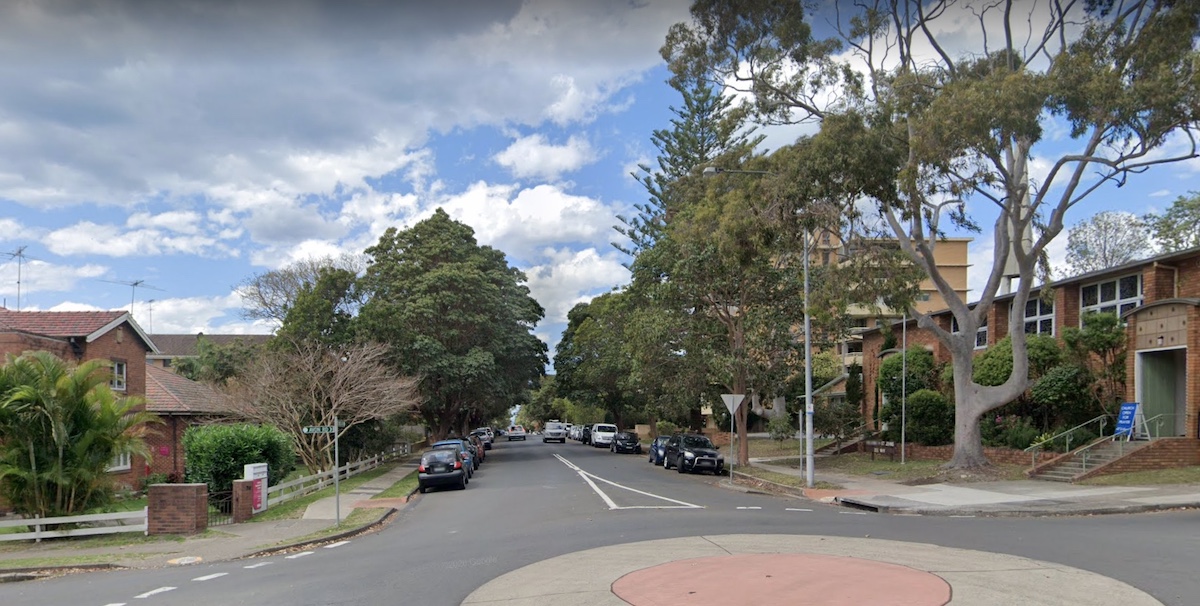
Dee Why offers coastal living at its best with the village on one side and the lovely beach on the other side. This suburb offers all the conveniences with a high walkability factor. It has major supermarkets, commercial and retail spaces, schools, childcare and medical centres, transport connections, cafes and restaurants, a serene native bush and rain forest environment, and the beach and ocean pool all within walking distance.
Photo Credit: Google Maps
Once dubbed as a ‘dodgy’ location, Dee Why has developed as cosmopolitan locale next to the beach, thanks to an award-winning Dee Why Town Centre Master Plan. People from all walks of life are attracted to Dee Why’s surfside vibe, with large, contemporary houses nestled alongside low-cost apartment units.
More than a third of dwellings in this suburb are apartments from low-level to high-level boutique developments. Here, there are no shortage of apartments and less than 50 per cent of Dee Why’s dwellings are rented units. Closer to the water, however, are the older-style homes with some contemporary rebuilds.
“Dee why is beautiful, you will fall in love with the beach at first sight. It is an affordable gem of Northern Beaches while still having high property values and being in constant demand due to the beach lifestyle it offers. It is also only 30-50 mins from the heart of the CBD, yet it feels like a holiday getaway. Highly recommend to all that want affordable, close to city, safe, family-friendly areas with a beach slice of paradise right at their doorstep!”
Tomo
“I lived here in previous years and moved back a year & a half ago. It has affordable beach location apartments which are predominantly popular with young families & professionals & everyone in between. It’s a beautiful area on the beachside when you get to the front there are restaurants & bars, now the area has been redeveloped towards Pittwater roadside I can see that the area will continue to improve. It’s only half an hour on the express bus to the city before 7 am and circa 45-50 min after this time.”
Donna
“Very happy with my business being on location in the area. I find that it’s rather quiet, and it’s nice to be near the sea. There are just the right amount of shops nearby and I reckon that the residential options here are sufficient if you’re single or if you’re a family or if you’re a pensioner. You should be able to find something that suits your taste here and in your budget too.”
Churches have been given the freedom to open for services for both vaccinated and unvaccinated once Sydney reaches 80 percent of the target vaccination numbers. Father Stephen Salmon of St John’s Anglican Church in Dee Why hailed the decision but affirmed that efforts to protect the unvaccinated in the congregation will continue.
Speaking in the radio show 2B, Father Stephens said that “practicing religion is a basic human right” and he is glad that the state has accorded extra freedom to religious institutions to open its doors to all worshippers regardless of their vaccination status.
The priest said that whilst congregating in churches may increase vulnerability to virus transmissions, he strongly believes that those who come to pray at St John’s Anglican Church will do their best to care and be mindful of others.
Father Stephens estimates that there will be few unvaccinated members in their congregation as St John’s supports the country’s vaccination efforts. He said that hasn’t come across any anti-vaxxers but he’s aware of vaccine-hesitant individuals who may have mental anxieties about the pandemic who seek comfort in worship.
“They come to churches, we make them welcome. We’ll be doing as much as we can to follow the rules like masks, distancing, and the rest of it to make sure they particularly are protected.”
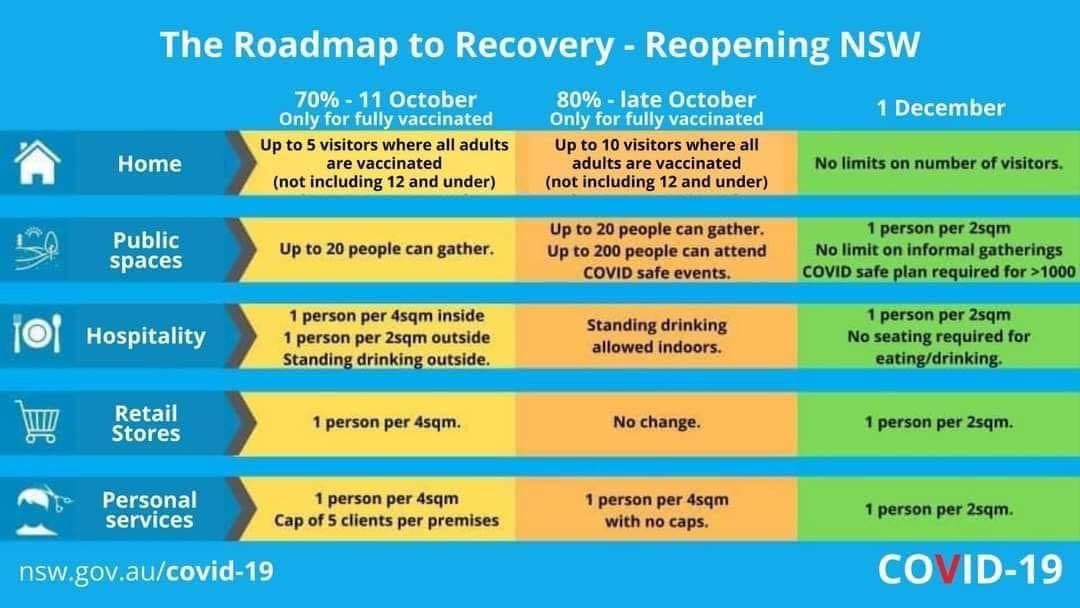
Former NSW Premier Gladys Berejiklian said that the state recognises places of worship as essential services not recreational sites, hence its reopening is part of Stage 2 of the Roadmap to Recovery on 25 October. Under the directive, all Sydney churches should still observe masking indoors and the four square metre social distancing rule, whether the member is fully vaccinated, partially vaccinated, or unvaccinated.
Photo Credit: Paul Toole MP/Facebook
Churches, however, won’t be required to check the vaccination status of those who come to hear the services. Church officials, on the other hand, will understand if the vulnerable or the unvaccinated would prefer to remain at home and hear the services via live streaming.
By 1 December, Stage 3 of the reopening plan will allow churches to adopt a two square metre social distancing rule. At this point, the state government estimates that 90 percent of the population should be fully vaccinated.
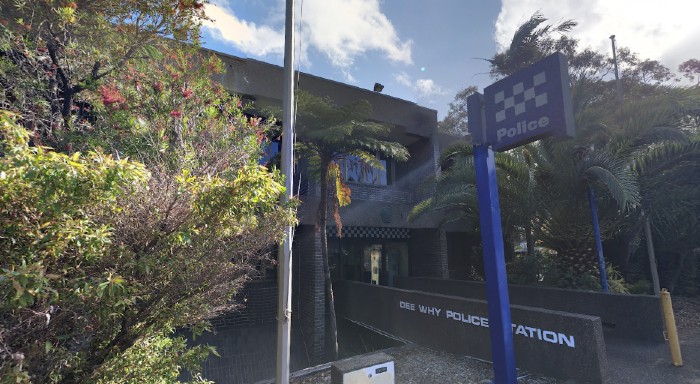
After 42 years of service with the NSW Police Force at the Dee Why police station, Sergeant Alan Le Surf, one of the longest-serving officers in New South Wales, has taken a well-deserved retirement.
He began working for the department as a driver for prison vans in and out of jails in Sydney in 1979, following his training at the old Redfern Police Academy.
Sgt Le Surf became part of the security planning team when Prince Charles and Princess Diana visited Australia in 1988. He even had the chance to have a short conversation with the late Diana on a train back to Sydney from the Central Coast.
One of the highlights of his career was when he received a Regional Commander’s Citation for the role he played in the investigation and the charging of a man who stabbed another man to death at a bus stop outside Warringah Mall in 2012.
A retirement ceremony to send off Sgt Le Surf was scheduled at the end of his last shift, but due to the restrictions brought by the pandemic, the event was cancelled.
Despite that, Sgt Le Surf received a Commemorative Service Board from the Northern Beaches Police Area Command, showing his rank badges, citations and awards, recognising his service for over four decades. His head, Superintendent Pat Sharkey, also offered a farewell speech to the 60-year-old retiring police officer.
Retired police Sergeant Alan Le Surf (Photo credit: Manly Council)
In the time he’s been on the job, Le Surf has become a fixture in the community. He helped people through his voluntary community work with Life Education, an organisation that provides health, drug and alcohol education to empower kids to make safe and healthy choices.
Did you know that Sgt Le Surf was also a former councillor for Manly Council? During his time as a serving officer, he spent almost a decade as a councillor for the Council.
He has lived in Manly all his life and has had an association with Manly Council since 1979 when he was a member of the Manly Youth Council. He established Kangaroo Rock and is a member of Manly Apex 40.
Photo credit: Totally Rounded Space/Google Street View
His years of dedicated service to the community made him a recipient of a prestigious award, having been named as the Manly Citizen of the Year in 2003.
He received numerous awards as a police officer, which includes the National Medal, with three clasps for his years of service; the National Police Service Medal and his recognition at the Commissioner’s Unit Citation as part of the 2007 APEC contingent, where he joined a squad tasked to plan and manage the event.
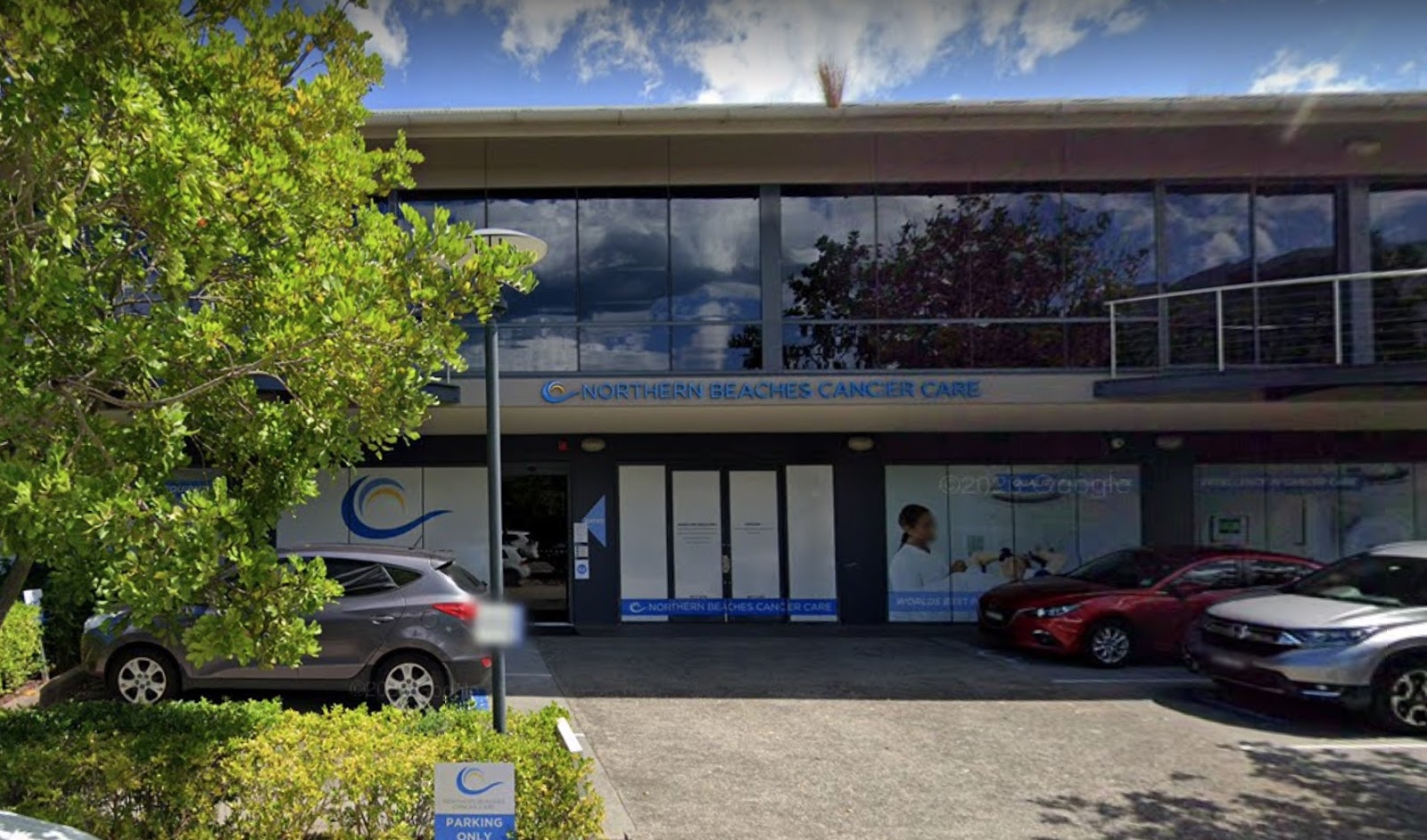
Did you know that a wig library for cancer patients has opened at Northern Beaches Cancer Care? The free service has been made possible with the help of the Dee Why RSL.
The new wig library, which opened in June 2021, has an initial 100 wigs bought with the $25,000 funding delivered by members of the Dee Why RSL in collaboration with the Northern Beaches Community Cancer Charity. The group was approached by the Cancer Council NSW to assist with the project for the Oncology and Infusion Centre, which sees around 60 patients every week.
“We have all been affected by cancer in some way – whether it be personally, through friends, family or even the media – and the Wig Library initiative deeply moved the Board and Executive Management Team,” the group stated. “We were very honoured to be able to assist in some small way and through the support of our members, were able to donate $25,000 towards this initiative.”
The Northern Beaches Cancer Care has volunteers who will help cancer patients pick out the right wig and dispense other grooming and care tips to make them feel better about wearing the accessory. These volunteers have undergone training with Cancer Council NSW’s Look Good Feel Better program.
Photo Credit: Google Maps
Previously, cancer patients at the centre didn’t have a place to fit the wig given at the hospital. They also didn’t have an expert guide to tell them which wig will look better on their face and complexion.
One cancer patient in remission was emotional when she saw the wig library. She said that wearing a wig and knowing how to groom and beautify herself has been a life-changing experience. It also made her feel normal again after weathering through a series of treatments.
Another woman who has been getting her weekly treatment lauded this initiative to provide cancer patients access to beautiful hairpieces. Unknown to many, good, natural-looking wigs are quite expensive and hair loss can be a devastating experience for a lot of cancer patients.
A Dee Why local with stage four ovarian cancer has been reaping the benefits of new cancer drugs that could improve her survival rate.
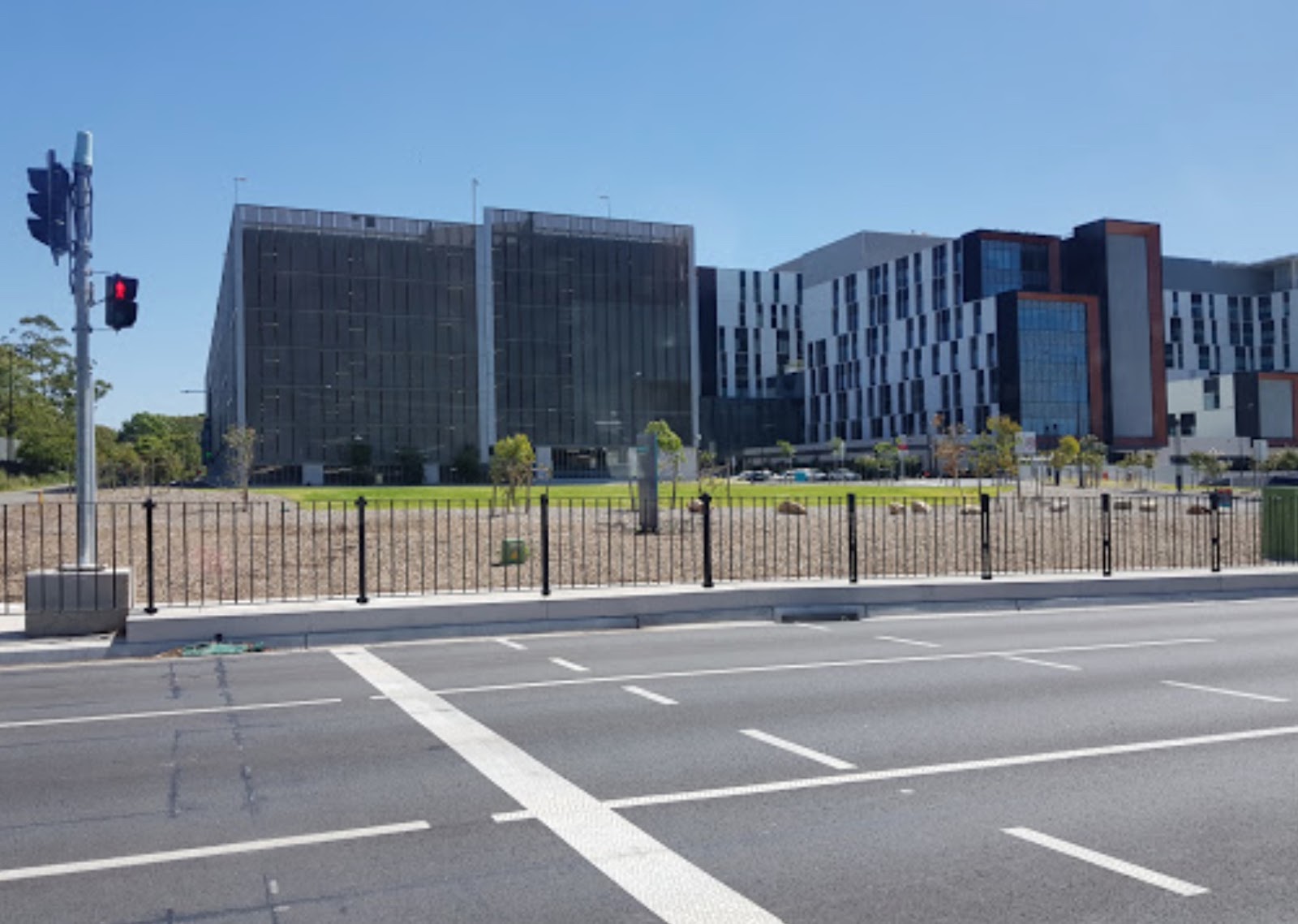
Michelle Cole, the 52-year-old bus driver, has been seeing oncologist Dr Antonia Pearson at the Northern Beaches Hospital, who put her on Bevacizumab and PARP inhibitor on the very first day the Australian government made these treatments available via the Pharmaceutical Benefits Scheme (PBS).
Dr Pearson said that these new cancer drugs, which have been on the market since late 2020, are helping Ms Cole live a more normal life despite her advanced condition. Since being on the treatment, the Dee Why local, who is married to Kym Weekes, could still continue driving her bus routes for at least two hours or do the things she loves, like watching the games at the Beacon Hill Football Club where she used to play.
Ms Cole learned of her cancer in 2015 received treatment at the Manly Hospital. However, after a period of remission, her cancer came back in 2019 and it has spread to other parts of her body.
According to Dr Pearson, ovarian cancer is one of the trickiest diseases to diagnose since the symptoms are common to most women, such as bloating, abdominal discomforts, and always feeling tired. However, these new therapies are extending the life of the patients, especially if they regularly work with their oncologist.
Both doctor and patient recommend that women should get tested for tumour markers earlier for better chances of prolonging their life.
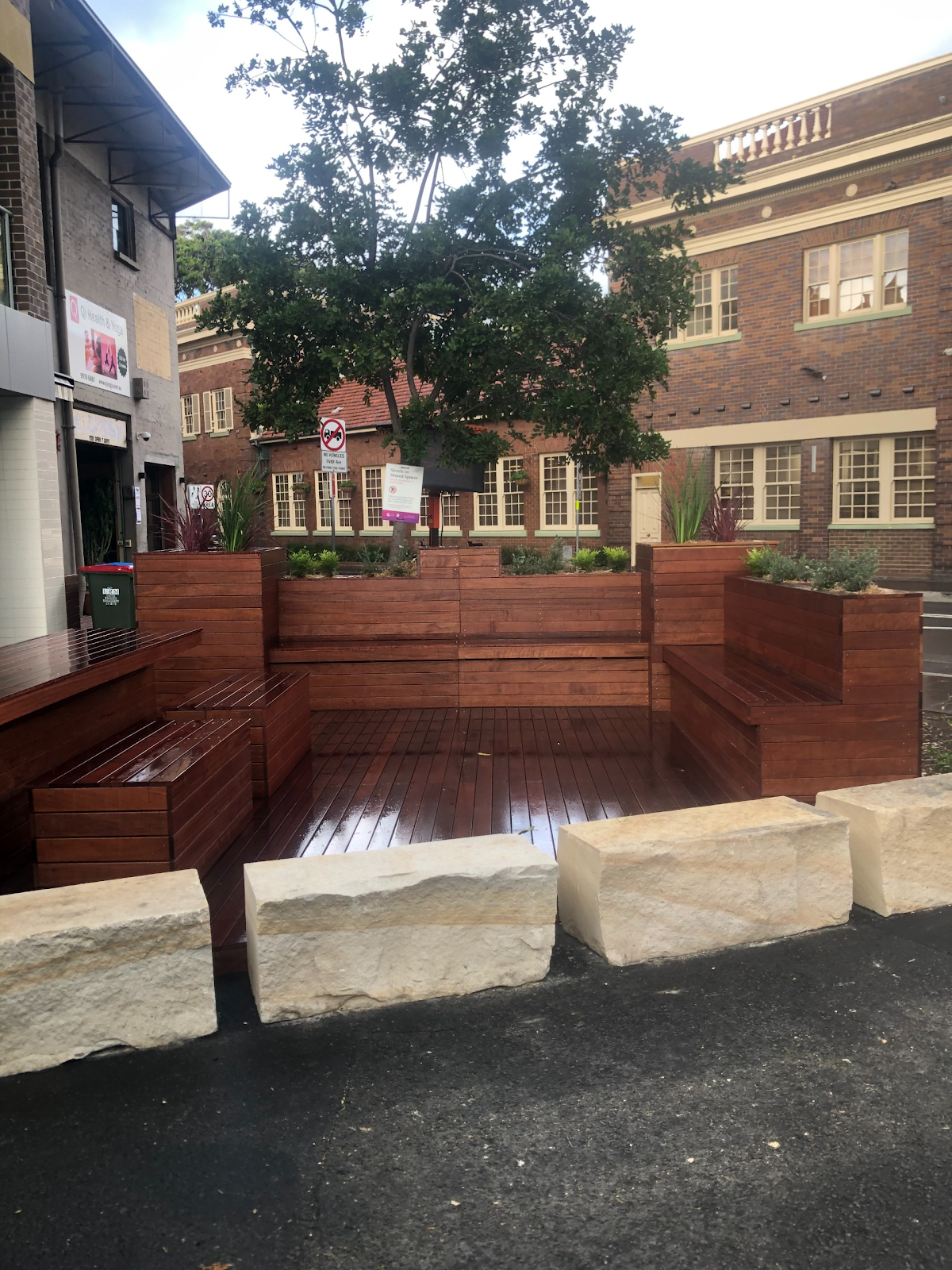
A proposal has been put in motion calling for the widening of the Dee Why seafront footpath to reduce traffic to a single lane. The Northern Beaches Council is inviting the local community to attend their information sessions and provide feedback about the project.
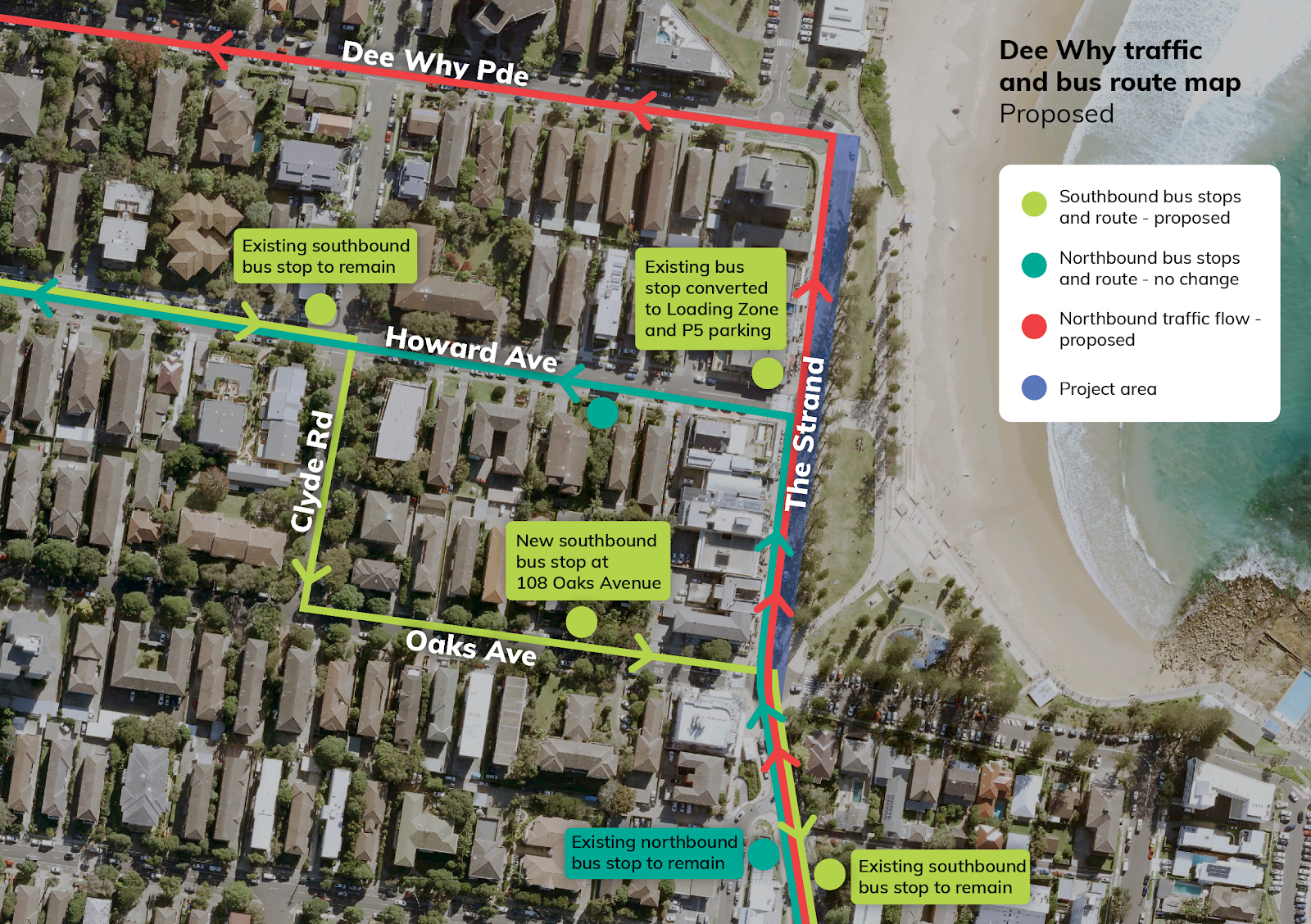
The proposed widening of the foot path, which spans the 220-metre seaside strip, will make space for a two-way bike path as well as additional public seating. With the new changes in mind, the Dee Why Beach car park will only be accessible through the seafront road.
Photo credit: Northern Beaches Council
The seafront also has the potential to become much safer. The implementation of a 30km per hour speed limit between Oaks Ave and Dee Why Pde, in tandem with a single lane road, could reduce the odds of traffic accidents occurring significantly. To accommodate road modifications, bus services from the Strand to Clyde Rd between Howard Ave and Oaks Ave will be re-routed.
Photo credit: Northern Beaches Council
These changes are currently under consideration, and the Northern Beaches Council proposes they trial the single lane seafront road over the span of six months from July to December. It will be funded entirely by the NSW Government’s Streets and Shared Spaces Program.
To guarantee public satisfaction with the proposal, the Dee Why community is invited to attend information sessions to ask questions and learn more about the planned changes. These sessions will be held at Dee Why Surf Club at the Strand on the following dates:
Thursday, April 8. 11:30 a.m. and 12:30 p.m.
Saturday, April 10. 11:30 a.m. and 12:30 p.m.
Thursday, April 15. 6:30 p.m. and 7:30 p.m.
Thursday, April 22. 11:30 a.m. and 12:30 p.m.
Bookings will be mandatory, and those interested in registering can visit their website. Those interested in providing feedback or giving voice to their concerns can also leave comment forms via the same link. Comments are set to close on Monday, the 26th of April.
Should the proposal’s trial pull through, it will be implemented in the latter half of 2021, starting July and ending in December.
Rare ocean critters recently surfaced along the beaches of Dee Why, creating the ‘blue fleet’ — a mass of blue sea creatures that have washed up mostly along the shores of Australia’s east coast.
Nudibranchs, jellyfish, bubble-rafting snails and other floating azure marine creatures found themselves miles away from the ocean after washing along the shores of the Long Reef Beach in Dee Why, forming what is known as the ‘blue fleet’.
Among these specimens is the rare blue glaucus, also known as a blue dragon. The bright blue color warns of its venomous nature, designed to ward off predators while simultaneously acting as camouflage.
Photo credit: CC-BY-SA/Sylke Rohrlach from Sydney/Wikimedia Commons
Unlike most venomous creatures, however, the blue glaucus doesn’t produce toxins on its own. Instead, it feeds on other venomous creatures and stockpiles their toxins to use against predators. The creature floats upside-down on the water, with its bright blue side facing the ocean backdrop while its darker side blends with the ocean floor.
Other creatures that washed ashore include the violet snail, which floats using bubbly secretions of mucus. Like blue dragons, violet snails also feed on venomous creatures such as the bluebottle — another member of the blue fleet, albeit significantly more common in Sydney’s beaches than the blue dragon and the violet snail.
Photo credit: Rez242/Wikimedia Commons
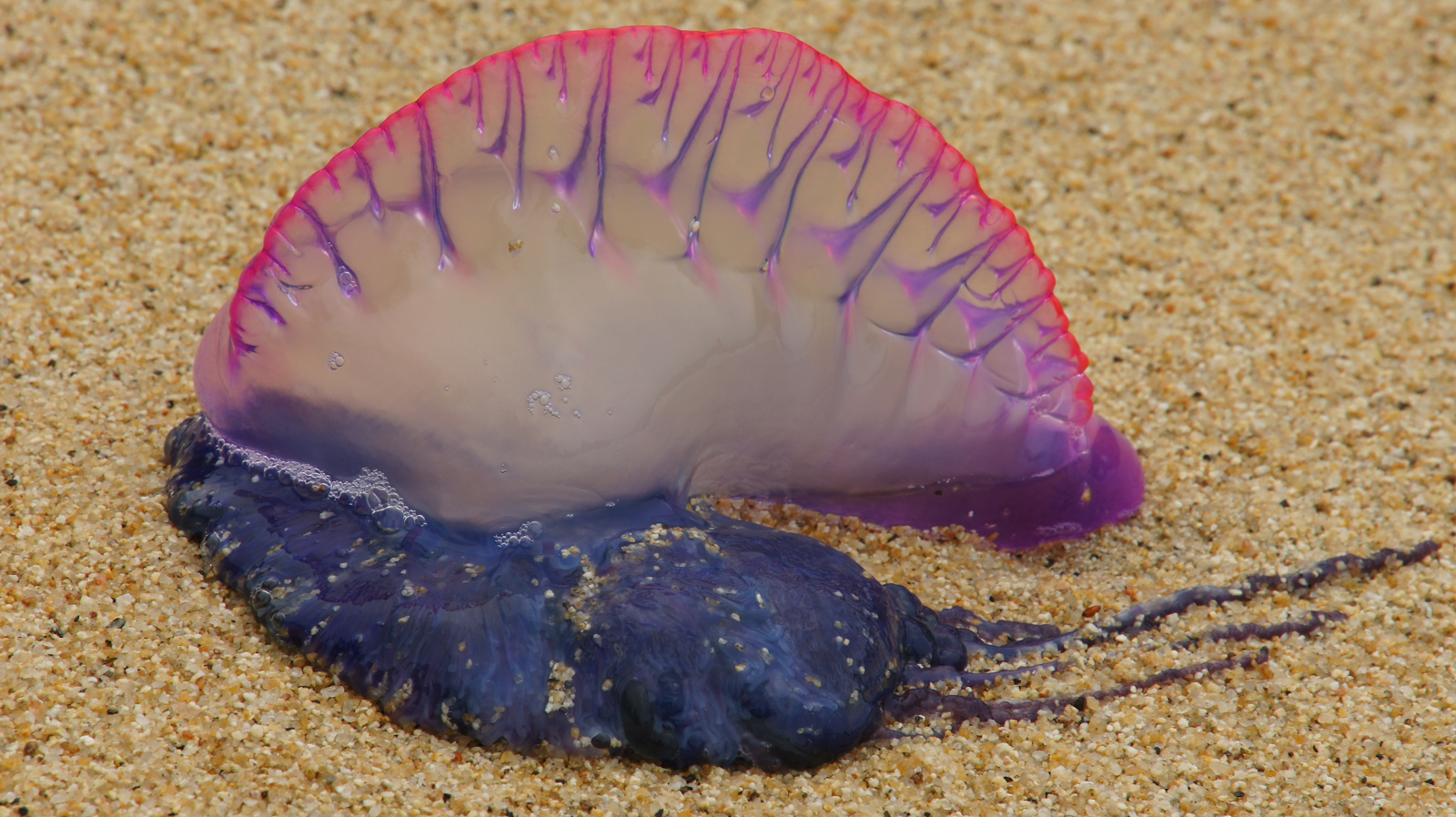
The bluebottle, which is also commonly known as the Portuguese man o’war, happens to be the most common member of the blue fleet. It can be typically found beached and washed adrift along Australian shores. Bluebottles are not singular animals, but rather colonies of four different kinds of organisms that have evolved to perform specific functions.
Comprising a bluebottle are the pneumatophores, dactylozooids, gastrozooids, and gonozooids. Pneumatophores, also known as the float, is a single entity that keeps the colony afloat. Dactylozooids, on the other hand, make up the tentacles of the man o’war, which detect and capture prey. Gastrozooids digest the food captured by the tentacles, and gonozooids carry out the reproductive functions of the colony.
Photo credit: CC-BY-SA/Biusch/Wikimedia Commons
The creatures of the ‘blue fleet’ have adapted to take on these colours for numerous reasons, though the most common factor across them is how the color blue helps them blend with their surroundings by matching the color of the ocean. Sea dragons in particular tend to visit the beach a few days after a full moon, and though it’s unclear why, it is speculated that it is related to how moon phases affect the reproduction cycles of marine life.
Know more about the rich history of Dee Why’s 50-metre rock pool and toddlers area located at the southern end of Dee Why Beach.
There are 14 rock pools found at the northern beaches in Sydney. Each of these rock pools is unique in its own way. But more importantly, all rock pools serve as an important part of seaside living.
One of the most popular rock pools that people often visit is located at Dee Why. Compared to others, the Dee Why rock pools are bigger, with more facilities placed within the pool’s vicinity. There are also a number of cafes and restaurants nearby; hence, drawing more people into the area.
History of Dee Why Rock Pool
Dee Why Rock Pools in 2012 Photo credit: http://agreenphotojournal.blogspot.com/
Have you ever wondered how these rock pools at Dee Why came to be?
According to some of the remaining compiled files from the Warringah Council, the first pool at Dee Why was created by nature itself. At that time, the first pool was in a form of a broad shallow basin located in the rock shelf of what is now known as the main pool.
This basin was called the Bogey Hole. However, the heritage consultants back in 1990 refer to this basin as the first beginner’s pool.
Following the natural creation of the shallow basin, different local community organisations then decided upon themselves to create a man-made pool by excavating further the basin. This was the first man-made pool at Dee Why, and it was excavated by members of Dee Why surf club in 1915.
When the first pool opened, it had a size of 5-metre square, and it was also less than 1 metre deep. The small pool size was definitely ideal for parents who do not want their young children swimming off in the ocean. But a few years after its opening, in 1919 the pool was expanded further by the Council- making it 33.5 metres long.
Dee Why Rock Pool in 1920 Photo credit: Narrabeen Reunions and the Northern Beaches/ Facebook
In 1923 the Council appointed trustees called the Dee Why Improvement League, to overlook the maintenance and future improvements of the pool.
The League contributed significant funds for the regular improvement of the facility. In fact, they have even hosted several events such as Christmas Carnivals in order to gain sufficient funding for improvements of the rock pool, the seawall, the dressing sheds and kiosks at Dee Why Beach, Dee Why Park and Stony Range Reserve.
Some of the money allocated for the rock pool was used to build a second children’s pool which opened in October 1930. It was also during this period when Dee Why rock pool had an upgrade of 50-metre length and 21-metre width.
Due to the limited stored information about some of the developments of the rock pool, there were zero to few records that show or prove when and how the stilling pool – one of the elements at the rock pool- was formed.
The stilling pool or what the heritage consultants in the 1990s refer to as “the dam” or the catchment pool is located at the eastern end of the main pool. Despite its small size at 17 meteres by 6 meteres, the stilling pool is able to absorb some of the impacts of the waves that roll towards the main pool in heavy seas. Up until today the stilling pool remains and does its job effectively.
In 1973, a new pool was built for children by the Council. The heritage consultants call it the third beginners’ pool. The third pool was built specifically and immediately at the west of the main pool since the second beginners’ pool that was built a couple of decades back can no longer be used.
Later on, the Council named the new children’s pool after John Morison in honour of his countless hours of teaching children how to swim. The Northern Beaches Council also renamed the main pool after Isa Wye, former president of the Dee Why Amateur Ladies’ Swimming Club.
A street library in Dee Why has earned praises from former prime minister Tony Abbot. Found along the quiet stretch of Tango Avenue, the community initiative has apparently existed for years but Mr Abbot said he has “never seen anything like this before.”
“You read a book, you put it in here, and you take a book out,” Mr Abbot said.
“Reading is such a wonderful way of broadening the mind, it’s such a wonderful way of exploring parts of the world that you can never personally see, and, you know, isn’t it a great comment on the people of Warringah, something like this, which is an exercise in self-help.”
The former prime minister further described this commendable community effort as an “exercise in building social capital.”
It’s amazing the things you see and learn when you’re door knocking. The Tango Avenue street library is a testament to the strong community we have throughout Warringah. pic.twitter.com/njDpFinFWl
Following Mr Abbot’s viral video, a men’s walking group from Sydney decided to drop by the Tango Avenue Street Library last April to check out what books are currently for borrowing. Among the choices were “Baby Love,” “Las Vegas Babylon” and “Reboot.”
Hundreds of street libraries are actually found in Australia. There are at least 630 known sites in existence in Sydney alone, as per Street Library Organization.
People who borrow books from these street libraries can pass it on to their friends or put back in other networks. They may also unload their own stash if they are decluttering their book collection.