

Northern Beaches Transport Review Sparks Push for Metro Rail to Dee Why and Brookvale

A major transport review covering the Northern Beaches is open for public feedback, triggering a fierce local push to get a metro rail line to Dee Why and Brookvale onto the dynamic planning agenda for the first time.


The Northern Beaches Network Review examines how the peninsula’s main road and public transport networks are performing. The official scope targets five key arterial corridors: Mona Vale Road, Warringah Road, Military and Spit roads, Pittwater Road, and the Pacific Highway.

But local community advocates, business groups, and regional leaders are hitting back, warning that the official strategy focuses too heavily on short-term fixes while ignoring the massive structural changes the peninsula desperately needs.

The case for metro rail

The Northern Beaches still has no rail connection. Buses and private cars fight for space on the same gridlocked corridors, and while the B-Line has made a massive dent in transit times since launching in late 2017, the network is hitting its absolute ceiling.

Photo Credit: Transport NSW Blog

A formal community backlash is now gathering momentum, demanding that planners fast-track the “investigation of a mass transport solution such as a Metro rail to Dee Why and Brookvale” before the region bottlenecks completely.

Local submissions are also calling for aggressive bus priority upgrades north of Mona Vale, grade-separated cycleways, and immediate engineering fixes for notorious intersection logjams that the current official review largely glides over.
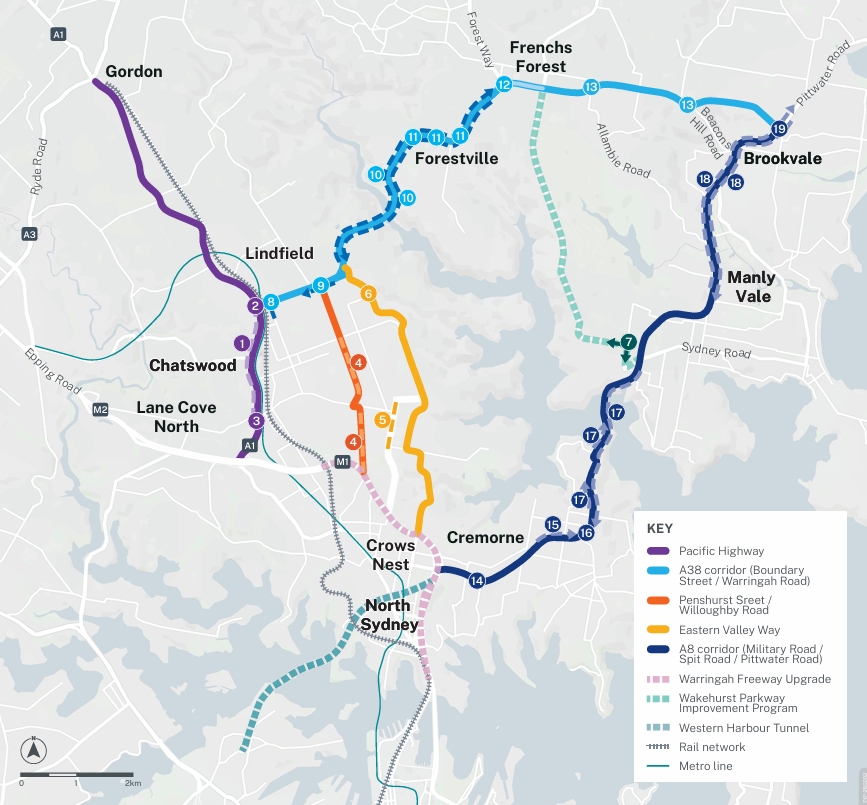
Photo Credit: NSWGov

For Dee Why commuters heading south to the CBD, daily trips remain an exercise in frustration due to shifting bus reliability and relentless Pittwater Road gridlock. The notorious Officeworks intersection in Dee Why stands out as a prime pain point in local feedback.

What is currently on the table?

The official review sticks to practical, medium-term adjustments. Key proposals include an east-west B-Line link connecting Dee Why to Chatswood’s existing Metro station, alongside stronger bus priority lanes along Pittwater, Military, and Spit roads.

Several major road upgrades are also rolling out across the region simultaneously:

  • Mona Vale Road West: Detailed design work and site investigations are moving forward to widen a 3.4-kilometre stretch from two lanes to four between Terrey Hills and Ingleside, which includes a new northern shared path.
  • Wakehurst Parkway: Safety works, intersection upgrades, and flood mitigation projects are progressing between Frenchs Forest Road and Pittwater Road in North Narrabeen.

While these projects offer welcome relief, residents argue they are minor Band-Aids on a much larger systemic problem.

Density is coming, and the roads aren’t ready

The clock is ticking for the peninsula’s transport infrastructure. High-density residential zoning is ramping up across major hubs, with Mona Vale, Frenchs Forest, Brookvale, and Dee Why all locked in as designated growth zones. New planning reforms mean developments can now scale up to six storeys along these transit corridors.
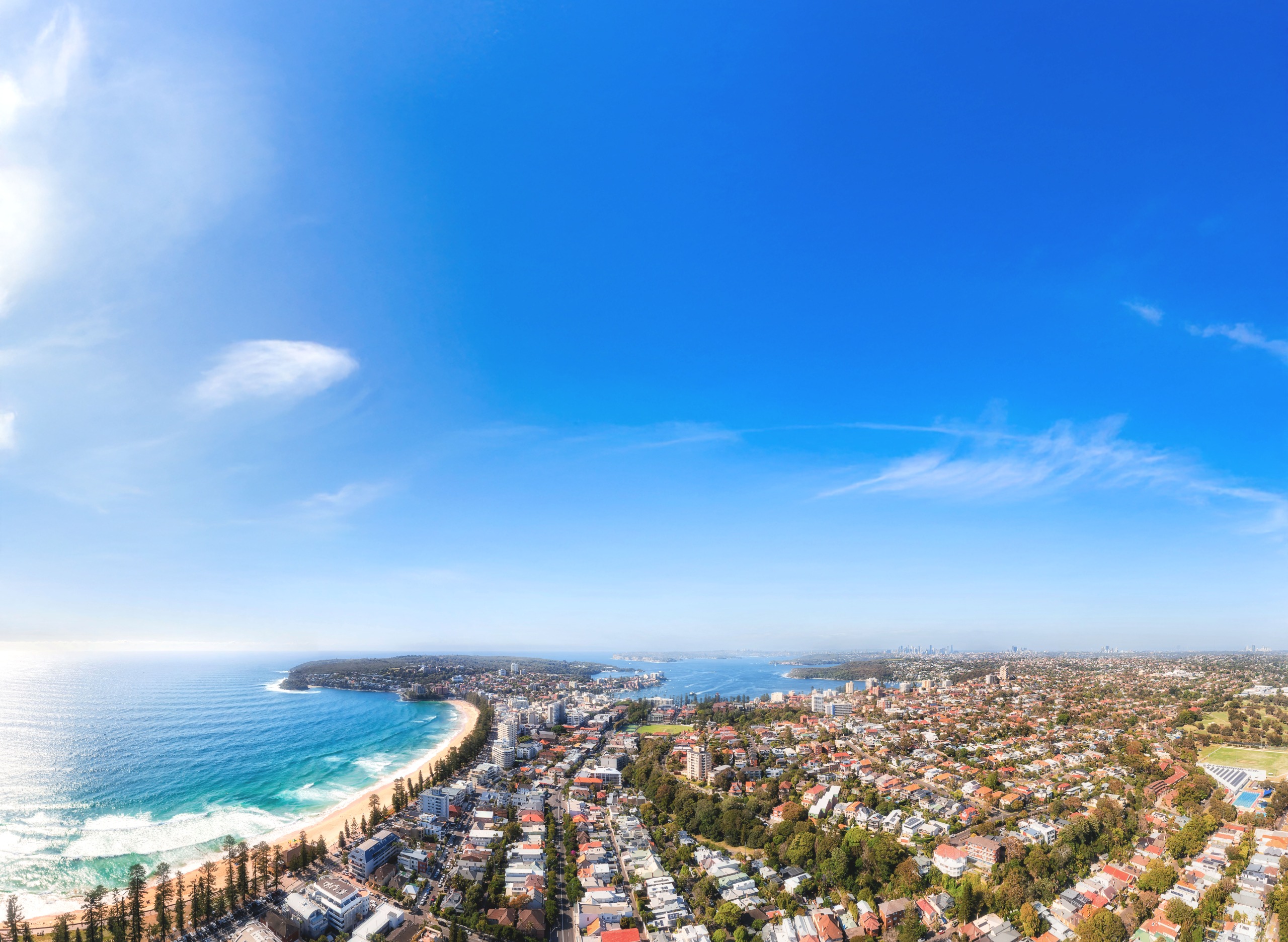
Photo Credit: NSWGov

Locals are warning that piling thousands of new residents into these areas without heavy mass transit infrastructure will completely paralyze local roads. The message from community leaders to infrastructure planners is clear: critical enabling infrastructure must pave the way for density, not trail behind it by a decade.

Tinkering around the edges simply will not cut it anymore when there are only a few bottleneck roads in and out of the peninsula.

Have your say by June 15

The community feedback window has been extended to Monday, 15 June 2026, to give residents more time to log their experiences. Locals can pinpoint exact problem intersections or congested corridors using the interactive map on the official Have Your Say platform, complete a travel survey, and download the full 30-page summary report.

To submit your feedback online, head to NSW Gov before the June 15 deadline.


Published 29-May-2026

Driver Charged After Head-On Crash Near Brookvale Oval

A head-on collision on Pittwater Road near Brookvale Oval sent one man to hospital and led to another being arrested and charged after he allegedly returned positive results for alcohol, cocaine and methylamphetamine.


Emergency services were called to the scene just after 9.30pm on Sunday 24 May, where a white 2001 Toyota LandCruiser carrying Queensland number plates and an orange 2018 Volkswagen Polo had collided head-on.

NSW Police officers from Northern Beaches Police Area Command attended alongside NSW Ambulance paramedics and firefighters from Dee Why Station, finding the front ends of both vehicles heavily damaged and airbags deployed throughout. It was not immediately clear whether one of the vehicles had been turning across traffic or had crossed the median strip.

The collision and its aftermath

Two occupants were in the LandCruiser, understood to be a man and a woman both in their 20s, and one man was in the VW Polo. Paramedics assessed all three at the scene. The 26-year-old Polo driver sustained minor injuries and was taken to Northern Beaches Hospital in a stable condition. The occupants of the LandCruiser were assessed but did not require hospital transport.

Officers subjected both drivers to roadside breath testing at the scene. The 28-year-old male driver of the LandCruiser allegedly returned a positive reading and was arrested. He was taken to Dee Why Police Station, where further breath analysis returned an alleged blood alcohol reading of 0.095.

An oral fluid sample was also taken for drug testing purposes, which allegedly returned positive results for both cocaine and methylamphetamine.

The charges he faces

The 28-year-old was charged under Section 110(4) of the Road Transport Act for driving with a middle range prescribed concentration of alcohol, commonly referred to as a middle range PCA. This offence carries an automatic licence disqualification of 12 months. He was granted bail and issued a Court Attendance Notice to appear at Manly Local Court on Wednesday 17 June 2026.

Additional charges relating to the alleged presence of drugs in his system are expected to follow once further testing is completed. Police confirmed they are awaiting those results. Depending on the outcome, charges will be laid under either Section 111 or Section 112 of the Road Transport Act.

If it is his first offence, either charge carries a maximum penalty of up to 18 months imprisonment and a fine of up to $3,300.

Road closed, then cleared

Northbound lanes of Pittwater Road were closed for the duration of the incident, with traffic diverted through Old Pittwater Road, Beacon Hill Road and Warringah Road. Southbound traffic ran on a single lane past the crash site. Tow trucks removed both vehicles and the road fully reopened by 10.15pm, less than an hour after emergency services first arrived.

Pittwater Road is one of the Northern Beaches’ main arterial routes, carrying significant volumes of traffic between Dee Why, Brookvale, Narrabeen and suburbs further north. The stretch near Brookvale Oval sees consistent traffic flow on weekend nights.

Anyone with information about this incident is encouraged to contact Northern Beaches Police Area Command or report anonymously through Crime Stoppers on 1800 333 000 or at crimestoppers.com.au.


Published 25-May-2026

Dee Why Tragedy Renews Debate Over Shark Safety Measures

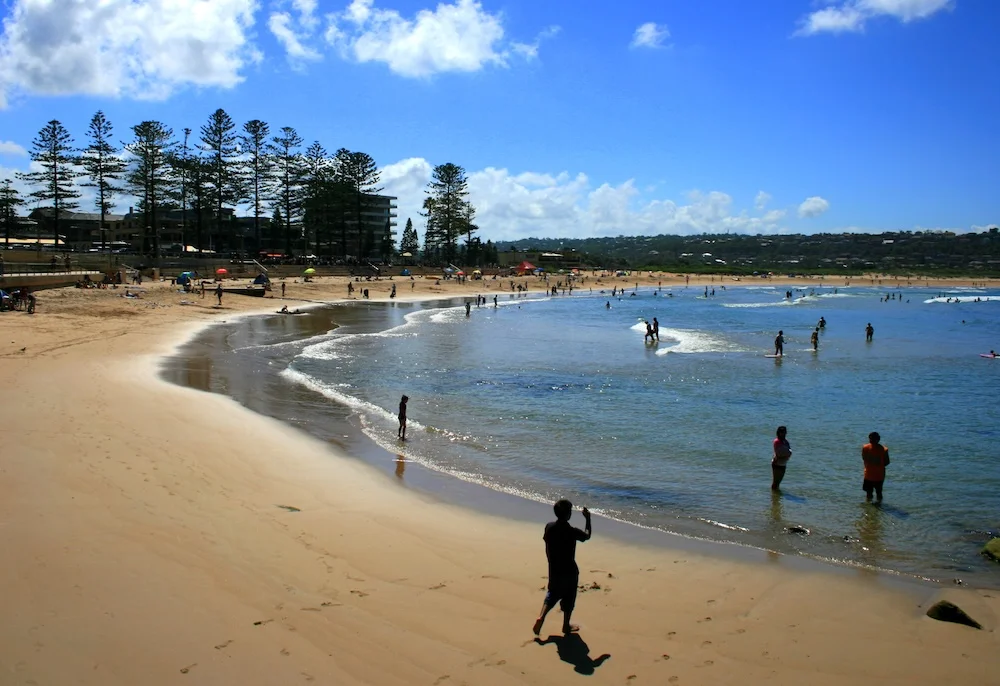
Dee Why is once again confronting its uneasy relationship with the sea after a fatal shark attack on Sydney’s Northern Beaches this spring. The incident has reignited questions about whether the shark nets lining much of New South Wales’ coastline are protecting swimmers—or putting marine life, and potentially beachgoers, at greater risk.


Reconsidering shark nets after recent incidents

It was widely noted that a shark net was in operation off Dee Why Beach at the time of the fatal incident, part of a decades-old state shark mitigation program. Following that attack, NSW paused a planned trial to remove nets at three locations.

Critics of the nets, including marine scientists and animal protection advocates, argue that these barriers are outdated, indiscriminate, and unnecessary in the age of modern tracking and alert technology.

Environmental and marine groups point to safer alternatives, such as smart drumlines and drone patrols, already operating successfully across parts of the NSW coast. These tools enable tagged sharks to be detected and tracked in real time without harming other marine species. 

Drones have spotted more than 1,000 sharks off New South Wales in the past year, allowing lifeguards to act quickly when sharks approach popular beaches.

Photo Credit: Wikimedia Commons/CC BY-SA 4.0

Modern tools and new data

According to reports, New South Wales is expanding its use of smart drumlines that trigger alerts when a shark takes the bait, allowing it to be tagged and released offshore. The technology works alongside listening stations and the Shark Smart mobile app, which notifies swimmers when a tagged shark is nearby. Researchers have also tested bite-resistant wetsuits and personal electronic deterrents to reduce bite risk for surfers and divers.

The safety debate intensified after a whale calf was found drowned in a shark net off Coledale Beach near Wollongong in late October. Humane World for Animals Australia said the incident was a “tragic, avoidable death” caused by the government’s reluctance to remove shark nets, which were reinstalled at 51 beaches in September despite ongoing humpback whale migration. Marine biologists warn that the nets not only kill non-target species such as turtles and dolphins but can also attract sharks by trapping dying animals.

Community push for safer coasts

Advocates across Sydney’s Northern Beaches say the future of shark management must balance safety with sustainability. They call for expanded trials of non-lethal systems, stronger community education, and continuous monitoring to ensure early detection.


Experts agree there is no way to eliminate risk entirely but emphasise that combining technology, communication, and responsible beach management can significantly reduce danger while protecting marine ecosystems.

Published 30-Oct-2025