
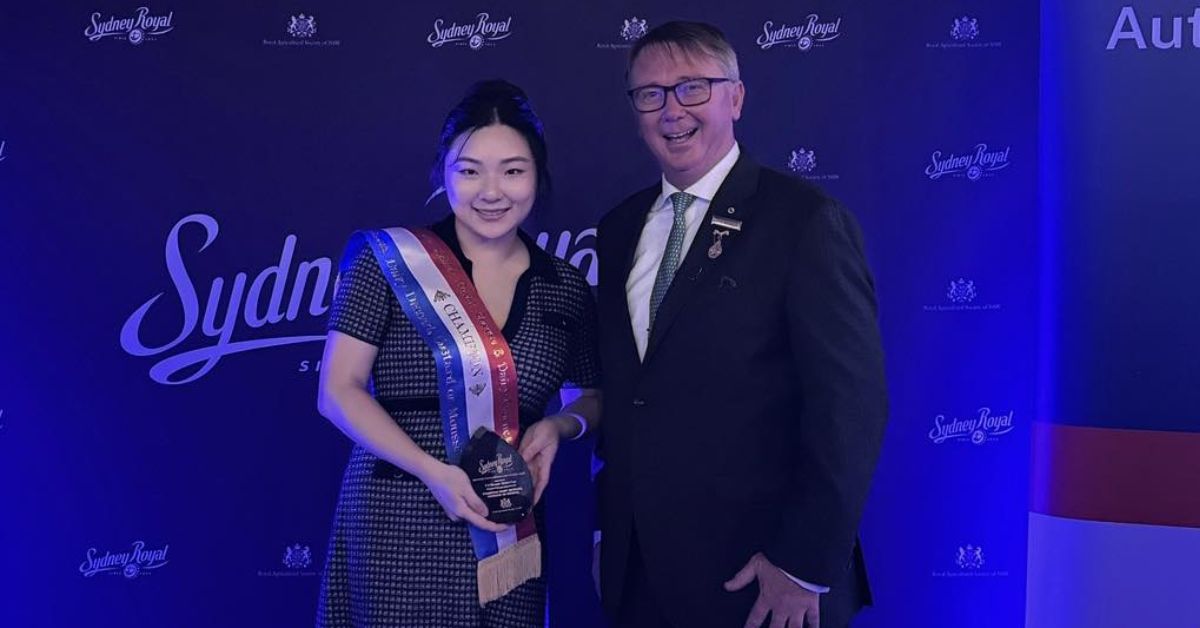
Local Gluten-Free Café Wins Big at National Dairy Awards

V’s Dessert Gluten Free has won four gold medals and the National Champion title in the Dairy Dessert, Custard or Mousse category at the 2026 Sydney Royal Cheese and Dairy Produce Show, the country’s most prestigious dairy competition, in its very first year of entering.


Founder Vivian Wang entered four flavours of her handcrafted gluten-free basque cheesecakes, including original, rose honey pistachio, blueberry and coffee, against entries from some of Australia’s most established producers.

Every single one came home with gold. The original basque cheesecake then went further, taking the National Champion trophy for its category from a field that required a gold medal just to be in contention.

“It was our first year entering, and we genuinely did not expect this result,” Wang said. “Competing alongside some of Australia’s best producers made the recognition even more meaningful.”

A Competition with a Long History

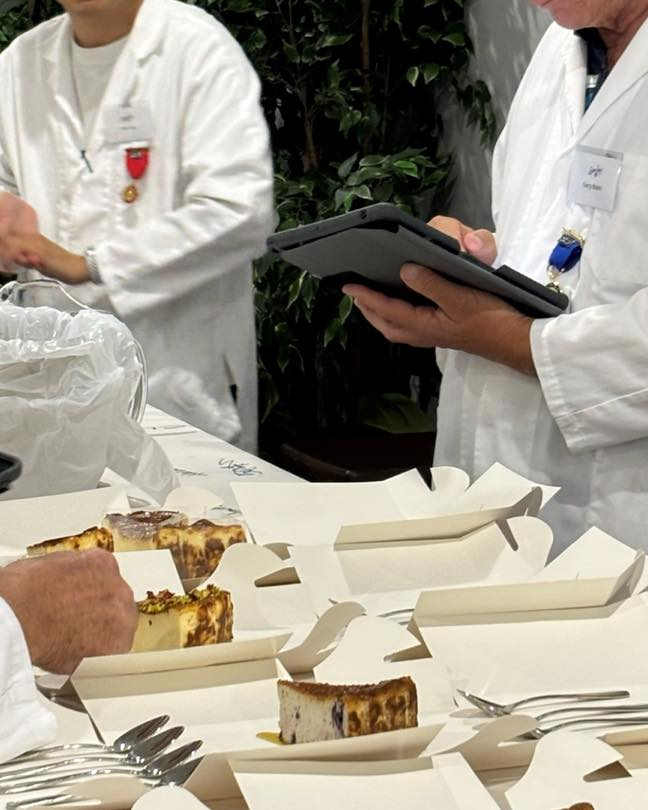
The Sydney Royal Cheese and Dairy Produce Show is not a gimmick. The Royal Agricultural Society of NSW has been running dairy judging since 1858, making it one of the longest-running food competitions in the country. The show operates in its current comprehensive format since 1994 and now spans 94 classes across cheese, milk, yoghurt, butter, ice cream and dairy desserts, with over 600 exhibits assessed by a national panel of food and dairy specialists.
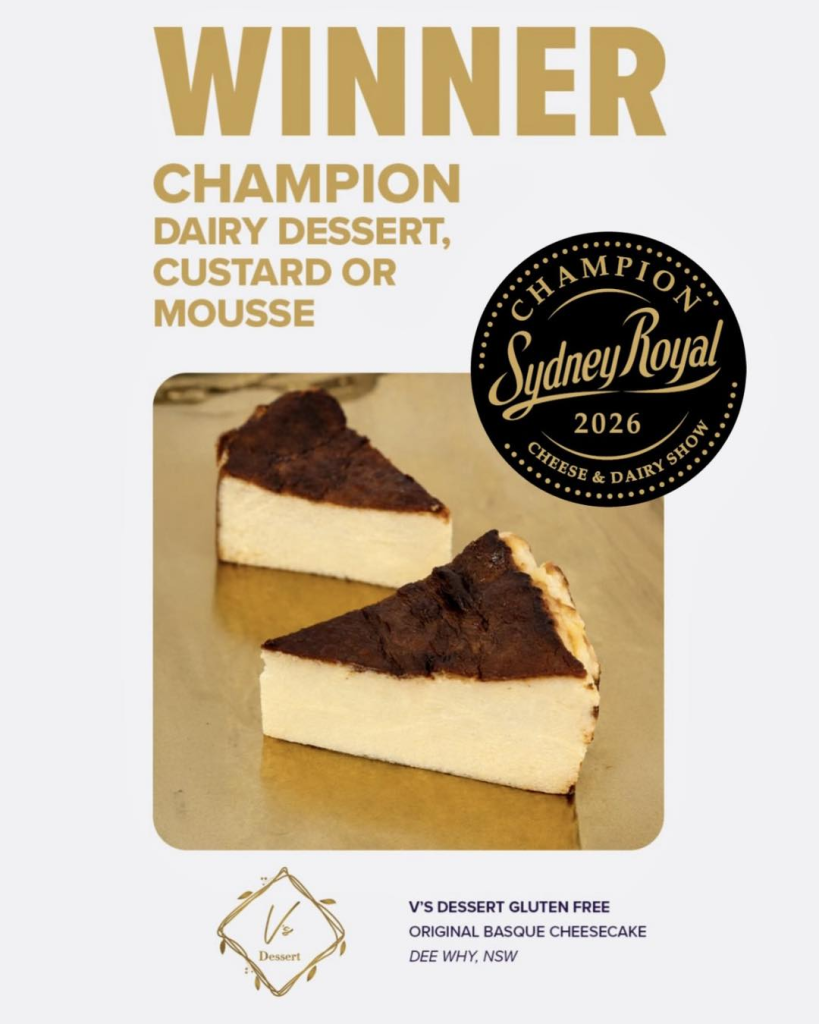
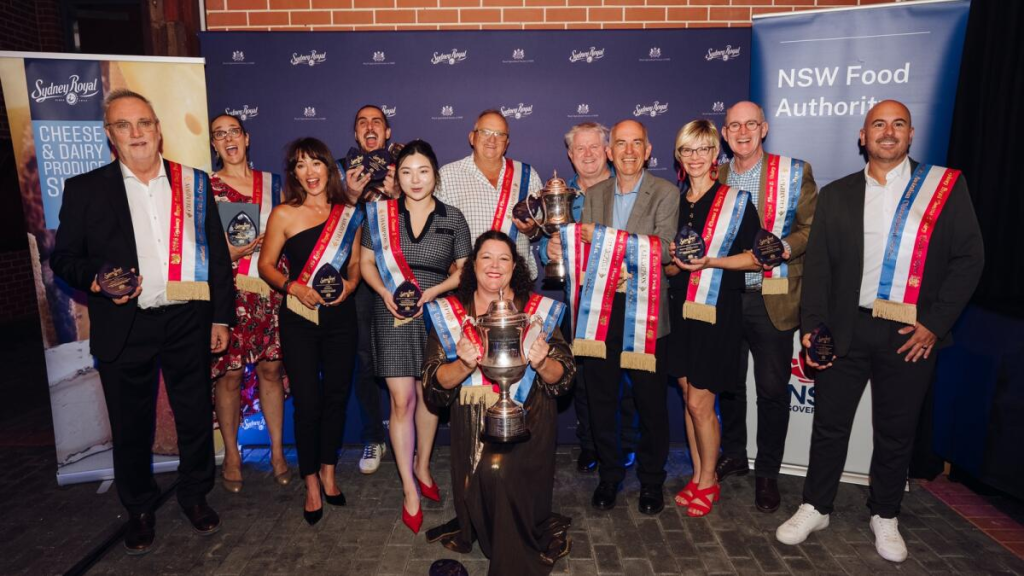
Every product is scored out of 20 on presentation, aroma, flavour, texture and body. Gold, silver and bronze medals go to entries that meet specific benchmark standards, and only gold medal winners advance to compete for one of sixteen champion trophies. It is a two-stage hurdle, and Wang cleared both in the one run.

Chair of Judges Tiffany Beer described the competition as an opportunity for producers to benchmark their products and receive independent expert feedback, whether presenting something innovative or a home-grown classic.

The 2026 champion in the overall cheese category was Riverine Blue from Berrys Creek Gourmet Cheese in Victoria, a repeat winner. Among the other champions in the show were a buffalo cream butter, an olive oil, honey, lemon and thyme ice-cream, and a khajoor (date) flavoured milk. Wang’s cheesecake stood alongside those names as one of 16 national champions across Australia’s dairy industry.

From a Fine Dining Kitchen to a Gluten-Free Café on Francis Street

Wang’s path to Francis Street runs through years of professional kitchen work, a pandemic and a conviction that gluten-free desserts had been done badly for long enough.

She trained as a pastry chef and spent years working in fine dining, drawn to the precision and elegance of dessert work. When COVID closed restaurants and she found herself baking at home, she started experimenting with gluten-free formulations, motivated in part by wanting to help people who had limited access to genuinely good sweet options.
“Desserts allowed me the time to go at a slower pace and work with perfection and precision,” Wang said. “The plating, the prep work, the elegance, it suited me perfectly.”

“When lockdowns hit and restaurants closed, I started experimenting at home and I realised there was a huge gap for genuinely good gluten-free desserts. I wanted to help people and I have the skills and knowledge, so I thought, why not give it a go.”

The café opened on Francis Street in September 2024. Wang’s philosophy from the start was that gluten-free should not feel like a compromise. The texture, the balance, the flavour had to come first, and the absence of gluten had to be incidental rather than the point.

“These desserts aren’t replacements, they just naturally happen to be gluten free,” she said. “We bake in small batches using high-quality ingredients and Australian dairy. Gluten free should never feel like a compromise. Texture, balance and flavour always come first.”

A Cheesecake Unlike the Rest

For anyone unfamiliar with the style, a basque cheesecake is defined by a deliberately caramelised, almost burnt top crust and an interior that is soft, creamy and custard-like rather than firm and sliceable. The name comes from the Basque Country in northern Spain, where the style originated and spread globally over the past two decades.
The deliberate caramelisation is the key. Where a classic New York cheesecake aims for a pale, smooth surface, a basque cheesecake goes into a very hot oven without a water bath, allowing the top to colour deeply while the centre stays just barely set. The result is a combination of bittersweet caramel and rich, yielding cream cheese that is unlike anything a traditional cheesecake produces.

Wang’s four competition entries, original, rose honey pistachio, blueberry and coffee, are all available at the café now.

Visit V’s Dessert Gluten Free

V’s Dessert Gluten Free is at Shop 22/2b Francis Street, Dee Why, on the corner of Redman Road. The café is open Thursday to Sunday from 8.30am, with closing times varying. Follow the café on Instagram and Facebook for updates on seasonal flavours, hours and new menu items.


Published 26-April-2026
St Luke’s Grammar Dee Why Leads Northern Beaches Schools in E-Bike Safety ID Tag Program

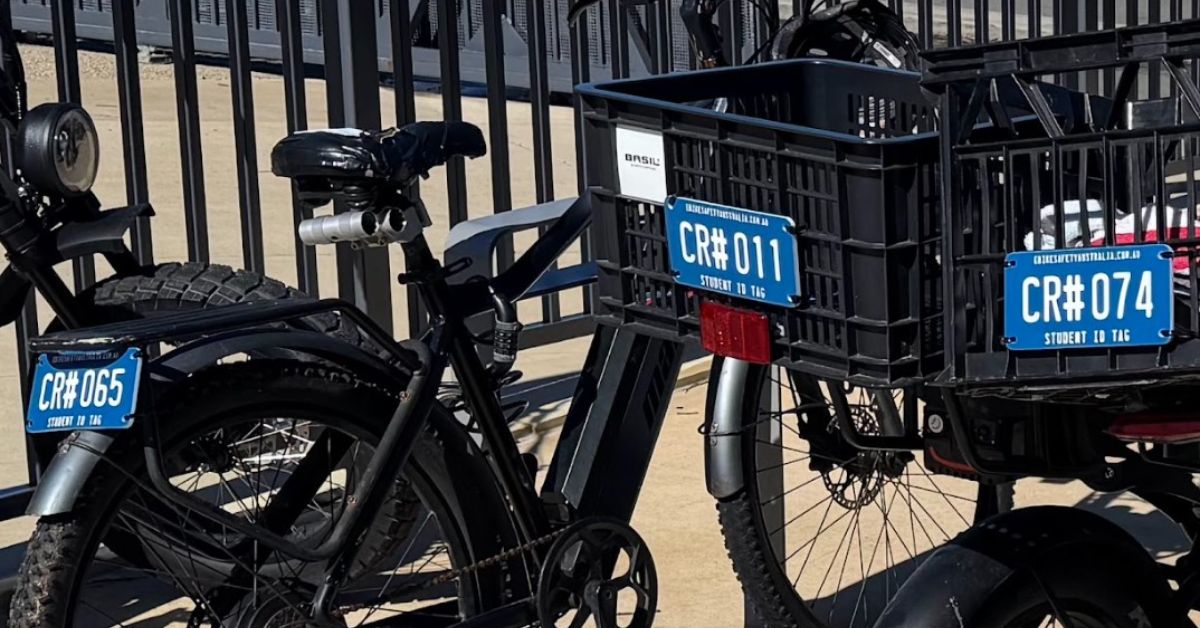
St Luke’s Grammar School in Dee Why has introduced e-bike student ID tags for senior students who ride to school, requiring riders to complete a two-hour online safety course and pass a road rules quiz with a perfect score before receiving a numbered tag linked to their name and attached to their e-bike.


The program, delivered by E-Bike Safety Australia (EBSA), is now running at St Luke’s in Dee Why and The Forest High School at Allambie Heights, making the Northern Beaches an early adopter of a school-based e-bike accountability model that has been piloted across schools in Sydney’s south, the Illawarra and the NSW far north coast.

For the Dee Why community, where the volume of students riding e-bikes to school has grown sharply over the past two years, the program provides a practical local response to a challenge that residents, parents and schools across the peninsula have been grappling with.

How the Program Works

Each EBSA ID tag carries a unique prefix that identifies the rider’s school, allowing any member of the public who witnesses unsafe riding to contact the school directly and quote the tag number. The school then manages the response under its own student wellbeing and safety policies. EBSA itself does not store ID tag data or identify riders by tag number as only the school holds that information.

Before receiving a tag, students must complete an online safety course covering road rules, helmet use, battery safety, riding etiquette and emergency procedures. Upon successful completion, each rider receives a digital licence and the visible school-specific ID tag for their bike.

The source brief confirms students must achieve 100 per cent on the final quiz before the tag and digital licence are issued, and the tag must be attached to the e-bike whenever the student rides in school uniform. St Luke’s also encourages students to keep their tags on their bikes on weekends.

At St Luke’s, principal Geoff Lancaster confirmed 40 students had already received their ID tags at the time of the official program launch, with another 50 from the school’s 1,200-student population having applied. The school has not yet received a public complaint about a tagged rider, though principal Lancaster acknowledged that as more students join the program, incidents will inevitably occur, describing the program’s response mechanism as a proportionate and educational one rather than punitive.

Why E-Bike Numbers Are Rising and Why It Matters

E-bike sales in NSW have grown from under 10,000 in 2017 to an estimated 760,000 e-bikes currently in circulation across the state, a scale of growth that has outpaced both regulation and safety education. On the Northern Beaches, that growth is visible in the daily movement of students riding to school along shared paths, footpaths and roads that were not designed for the volume or speed of modern e-bikes.

As far back as 2022, local schools were approaching community authorities seeking safety resources for students riding e-bikes to school, with many young riders observed not wearing helmets correctly, carrying passengers and riding at high speeds. A community awareness campaign launched in 2024 reached more than 2.78 million views, reflecting the scale of public concern about e-bike behaviour in the area.

Under current NSW law, legal e-bikes must be pedal-assisted, limited to 250 watts of continuous rated power following a December 2025 regulatory change, and must not exceed 25 kilometres per hour under motor assistance alone. Riders under 16 may legally ride on footpaths. The legal framework does not currently require a licence, registration or any demonstrated knowledge of road rules to ride an e-bike, which is the gap the EBSA school program directly addresses at a local level.

What the Program Teaches

The online safety course covers helmet use, battery safety, road rules, riding etiquette and emergency procedures, giving students a structured introduction to the responsibilities that come with riding a motorised vehicle in shared public spaces. For students at St Luke’s, those who have completed the program describe the training as comparable in content and seriousness to the learner driver test, covering the same road rules that motorists must know and applying them specifically to the e-bike context.

The program’s accountability mechanism, the visible ID tag and the school’s authority to withdraw riding privileges, gives the safety education practical weight. A student who rides recklessly near the school or along local footpaths and paths can be identified, reported and counselled or suspended from riding to school, providing a consequence that purely educational messaging cannot deliver on its own.

Growing Use of E-Bikes Among Students

Dee Why sits at the confluence of several busy cycling and riding routes, and its schools draw students from across a wide northern catchment who increasingly choose e-bikes as their primary mode of getting to and from school. The introduction of the EBSA program at St Luke’s Grammar places Dee Why among the first Northern Beaches suburbs to move from general community concern about e-bike behaviour into a structured, school-based accountability response.

E-Bike Safety Australia is currently in discussions with Narrabeen Sports High School about adopting the program, and further Northern Beaches schools are expected to follow as the model proves its effectiveness. Schools, families or community members wanting more information about the EBSA school program can visit ebikesafetyaustralia.com.au.


Published 30-March-2026.