



Dee Why Lagoon is one of Metropolitan Sydney’s most contaminated waterways for microplastic pollution, according to a new report based on seven years of citizen-led shoreline monitoring.
Read: Dee Why Black Swans Raise New Cygnets at the Lagoon This Summer
The Australian Microplastic Assessment Project (AUSMAP) released its 2026 findings in a report titled Do We Have a Microplastic Problem in Our Coastal NSW Waterways?, published by the Total Environment Centre.
The report draws on data collected across Sydney’s estuaries, lagoons, harbours and coastal beaches between 2018 and 2025, and identifies Dee Why Lagoon, Port Hacking, North Harbour, and lagoons on the northern beaches, including Narrabeen, as the city’s worst microplastic hotspots.
Key Findings

Dee Why Lagoon recorded an average of 351 microplastics per square metre across multiple survey periods, with one sample reaching 839 per square metre, a level that falls within AUSMAP’s “high” pollution classification of 251 to 1,000 microplastics per square metre on its monitoring scale.
Nearby sites recorded similarly elevated readings. Curl Curl Lagoon averaged 101 microplastics per square metre across four surveys, with one sample recorded at 1,175 per square metre. Manly Cove, monitored across 78 surveys between 2018 and 2025, recorded an average of 631 microplastics per square metre in the first monitoring period and 1,660 per square metre in the second — making it one of the most comprehensively documented microplastic sites in Australia. Collins Flat Beach in North Harbour recorded a peak of 12,399 microplastics per square metre in a single survey.
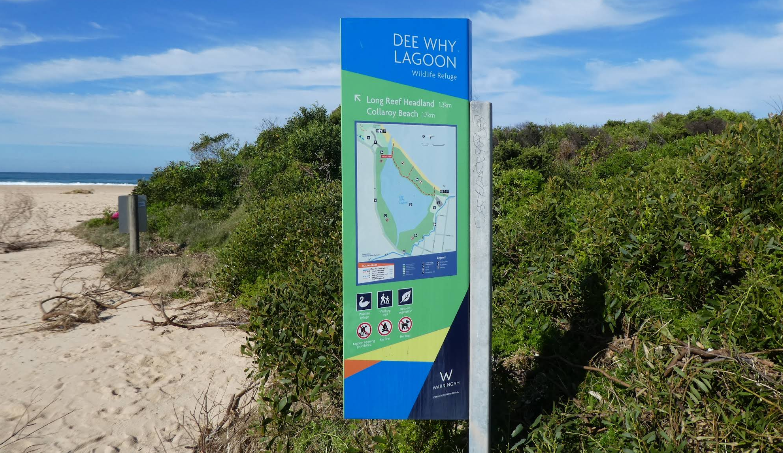
The report notes that smaller, low-flushed estuaries such as Dee Why Lagoon accumulate microplastics more readily than larger, tide-flushed waterways. Locations including Middle Harbour, Pittwater, and the Hawkesbury River, where water is flushed by tides and floods, recorded low concentrations, below 50 microplastics per square metre.
Foam was identified as the dominant microplastic type across most sampled Sydney locations. At Dee Why Lagoon, foam accounted for 52 per cent of recorded microplastics. Across the broader dataset, 67 per cent of Sydney sites recorded hard fragments and foam as the two most common types, and 89 per cent of sites recorded plastic pellets on the shoreline.
Synthetic Grass an Emerging Concern

The report includes what AUSMAP describes as some of the first site-specific evidence of synthetic grass fibres accumulating in Metropolitan Sydney waterways. Shoreline surveys have detected synthetic grass microplastic fibres at multiple locations dating back to 2019, with concentrations increasing at regularly monitored sites.
At Manly Cove, synthetic grass fragments were first detected in 2019 and concentrations have since tripled. At Rose Bay in Sydney Harbour, synthetic grass debris increased approximately tenfold between 2022 and 2025, reaching more than 20 blades per square metre. The highest average concentration recorded to date was at Tower Beach in Botany Bay, where up to 2,500 synthetic grass blades per square metre were recorded in 2024.
According to the report, synthetic grass fibres are released from installations, including sports fields, school playgrounds, residential yards and landscaped areas, through wear, weathering and maintenance. The fibres enter surrounding stormwater networks and accumulate in sediments and along shorelines, where they can absorb environmental pollutants and be ingested by wildlife.
AUSMAP research at a synthetic turf field in Ku-ring-gai found that stormwater pit traps captured more than 100,000 particles of rubber crumb and synthetic grass per sample, accounting for approximately 82 per cent of particle loss from the site. Sampling of runoff water entering a nearby creek found both rubber crumb and synthetic grass fibres were still present downstream of the traps. The report notes that such mitigation measures are not currently common practice.
Toxicology studies conducted by AUSMAP found that leachate from rubber crumb, a common synthetic turf infill material, affected 50 per cent of test populations of freshwater and marine species at concentrations of one to three per cent. Zinc levels in the leachate significantly exceeded Australian Water Quality Trigger Values. Other chemicals including 6PPD-q and HMMM were also detected, though the report states further trials are needed to determine their impacts on aquatic life.
Read: Dee Why Shark Encounter Prompts Fresh Warnings On Peak Bull Shark Season
Calls for Regulatory Action
AUSMAP is calling for a five-year moratorium on new planning approvals for synthetic grass fields pending further research into human and environmental harm. The organisation is also calling for enforcement of Australian Standards for pollution mitigation at existing synthetic turf sites, more detailed field management guidelines, and greater investment in natural grass alternatives.
The report states that prevention at the source is the most effective solution, given the difficulty of removing microplastics once they have entered aquatic environments. It calls for stronger regulatory protections and improved plastic waste management to protect marine ecosystems.
Published 21-February-2026