




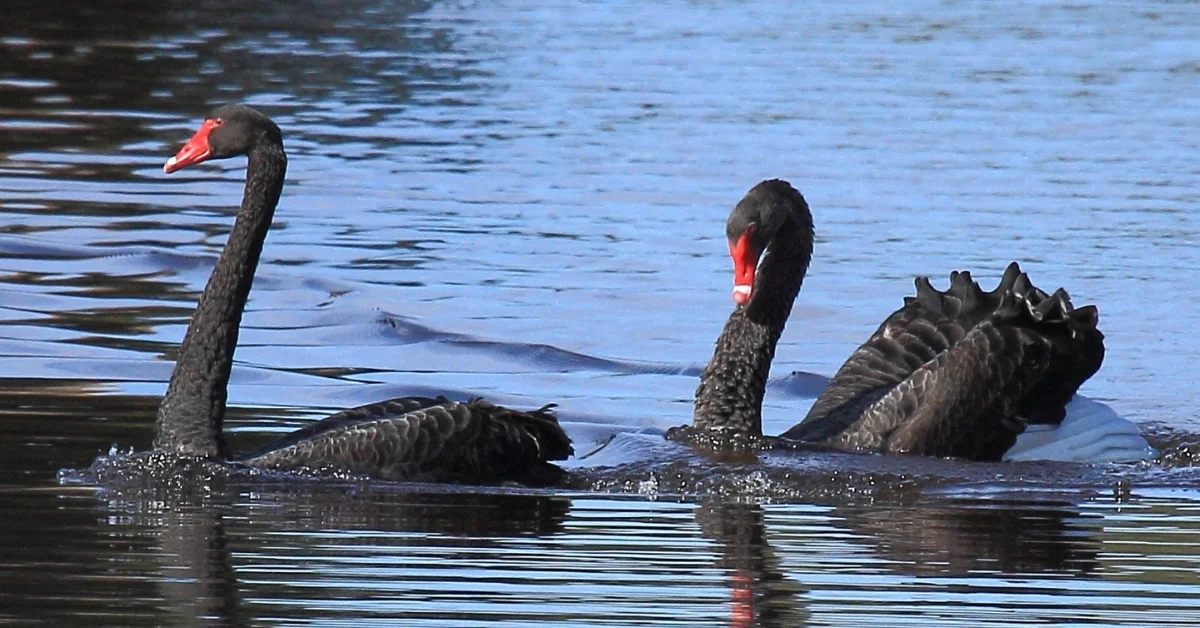
Dee Why black swans are thriving at the lagoon this summer, with fluffy cygnets marking the continued return of a species that once abandoned the waterway but now symbolises the suburb’s environmental recovery.
The downy youngsters have been spotted paddling around the lagoon with their protective parents, making the most of calm conditions while the water was closed to the public until the middle of January. For Dee Why residents, seeing Dee Why black swans raise their young at the lagoon represents decades of environmental restoration work finally paying off.
From Abandonment to Recovery
Dee Why black swans were once so numerous at the lagoon that the bird became embedded in local identity. Early 20th century, photographs captured 24 black swans on the water at once, enough that local organisations including Dee Why Public School, the bowling club and surfing fraternity all adopted the black swan as their emblem.
By the end of 20th century, the swans had completely abandoned Dee Why Lagoon. Unhealthy water quality, a silted bottom and rubbish-strewn foreshore made the habitat unsuitable for the native species that had defined the area for generations.
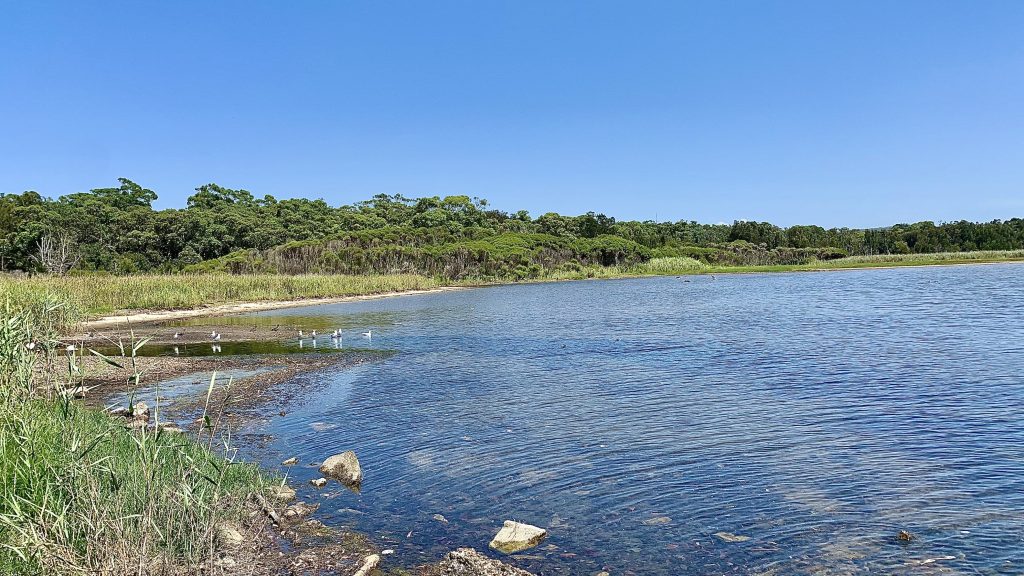
The turnaround came through consistent effort. Volunteers from Friends of Dee Why Lagoon worked alongside dedicated restoration specialists to clean up the waterway. Black swans began returning to Dee Why Lagoon, just as they returned to Narrabeen Lagoon after similar restoration work.
A Painted Swan That Brings Good Luck
The black swan’s importance to Dee Why lives on in an unusual local tradition. Sometime in the 1920s, someone painted a black swan on the footpath outside 103 Howard Avenue. That painting became a neighbourhood icon with special meaning—stepping on the painted swan brings bad luck.
Over nearly a century, anonymous artists have kept the tradition alive by repainting the swan whenever it fades. The most recent refresh happened in 2020, when the swan was carefully restored onto newly replaced pavement. The painting has grown over the years, now spanning two paving stones instead of one.
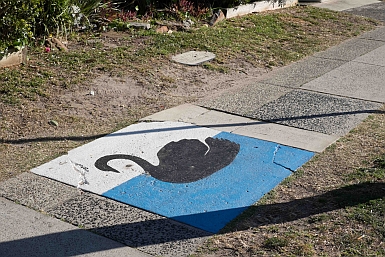
Worn grass on either side of the painted swan hints at how seriously locals take the superstition. Residents and visitors alike carefully step around the artwork, maintaining a tradition that connects modern Dee Why to its environmental heritage.
Both the painted swan and the lagoon catchment area appear along the Dee Why Heritage Walk, a 3.5 kilometre loop showcasing the suburb’s architecture, art, memorials and natural landmarks.
Protecting the Newest Generation
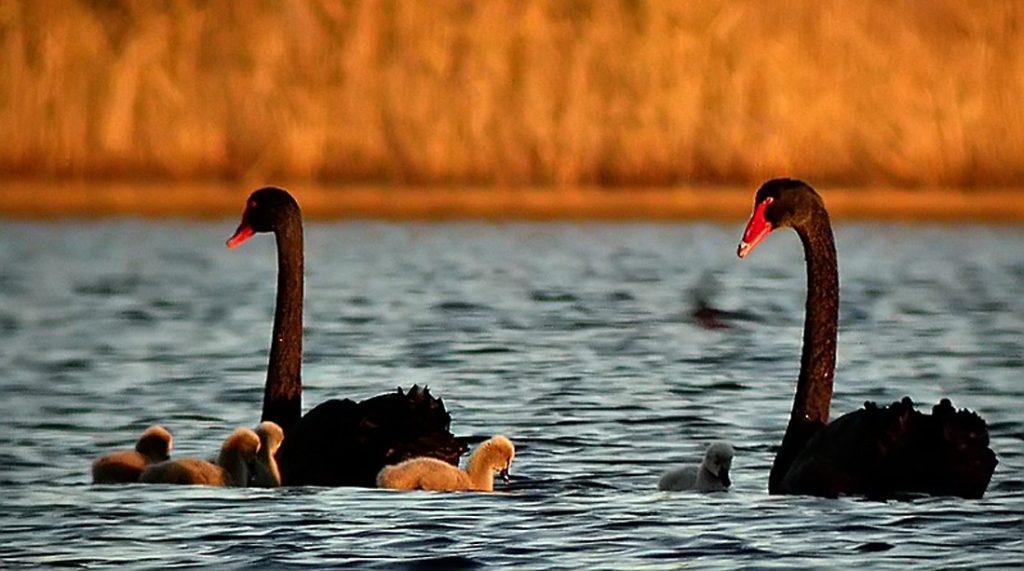
The current clutch of cygnets hatched under ideal conditions. With the lagoon temporarily closed, predators stayed away and rough water couldn’t threaten the vulnerable chicks. The parent swans—which pair for life and form strong bonds—have been teaching their young to navigate the local environment.
Anyone spotting the fluffy grey cygnets should keep their distance. Parent black swans actively defend their offspring from any perceived threat, no matter how well-meaning the approach might be.
The chicks are thriving thanks to the collaborative efforts of local Bushcare volunteers and dedicated beach and waterway monitors. These groups work together to maintain the wetland environment that now supports breeding black swans once again.
Success at Dee Why Lagoon shows what’s possible when communities commit to environmental restoration. The sand dune separating the lagoon from the ocean tells a similar story—once almost bereft of vegetation, it now supports dense native growth that stabilises the dune and provides habitat for local birds.
For Dee Why residents who remember when black swans were absent from the lagoon, watching new cygnets paddle through the water represents more than just a pleasant summer sight. It confirms that environmental recovery, while slow, delivers lasting results.
More information about Dee Why Lagoon Wildlife Refuge is available at northernbeaches.nsw.gov.au.
Published 25-January-2026.