


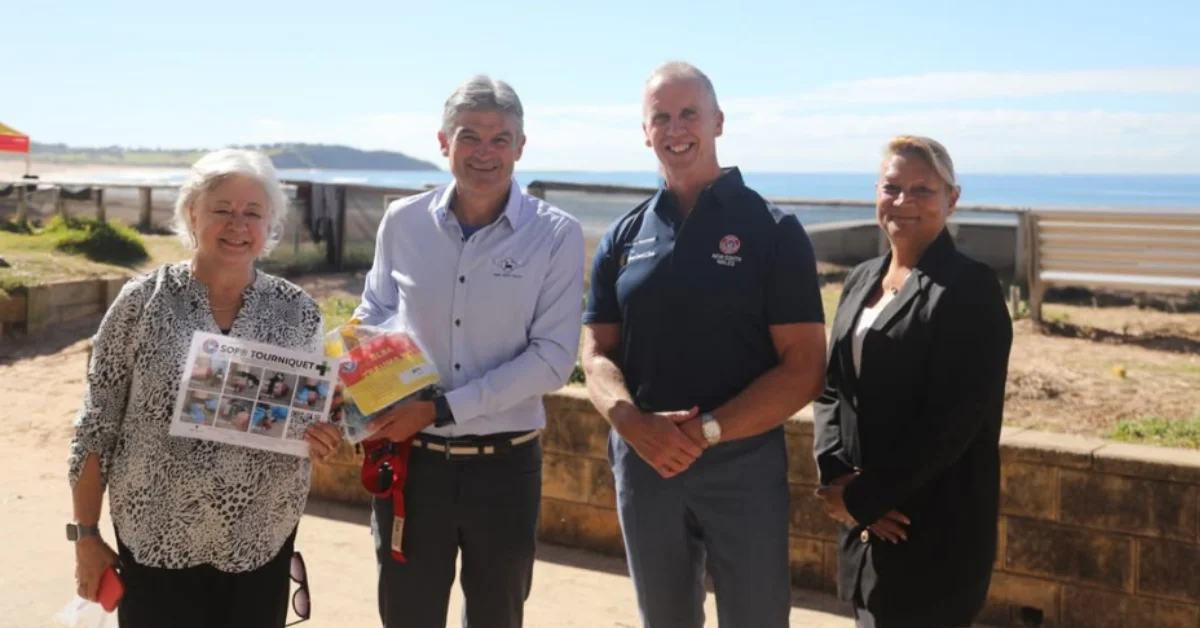
Dee Why Surf Club has become the launch point for a rollout of shark bite trauma kits across NSW, with emergency first aid packs to be placed at surf life saving clubs following recent serious and fatal shark attacks.
Dee Why Shark Bite Kits Add Public Access To Emergency First Aid
The kits are being installed on the outside walls of 129 surf life saving clubs, giving beachgoers access to emergency equipment when lifesavers or lifeguards are not on duty.
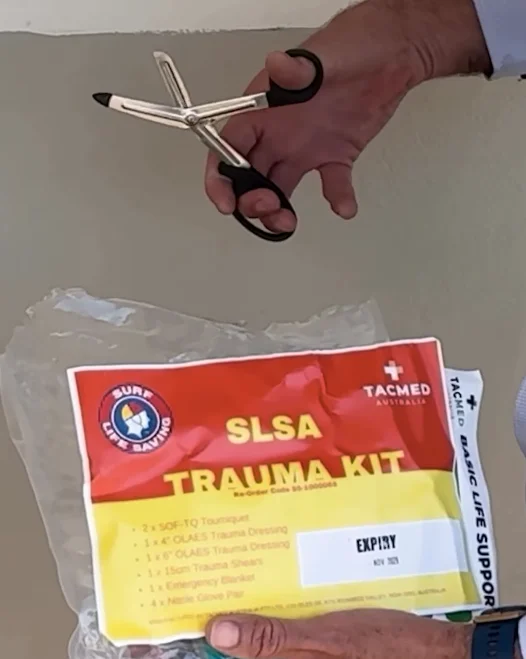
Each pack includes tourniquets, bandages and wound dressings. The equipment is intended to help control severe bleeding before first responders arrive, particularly in the critical minutes after a shark bite.
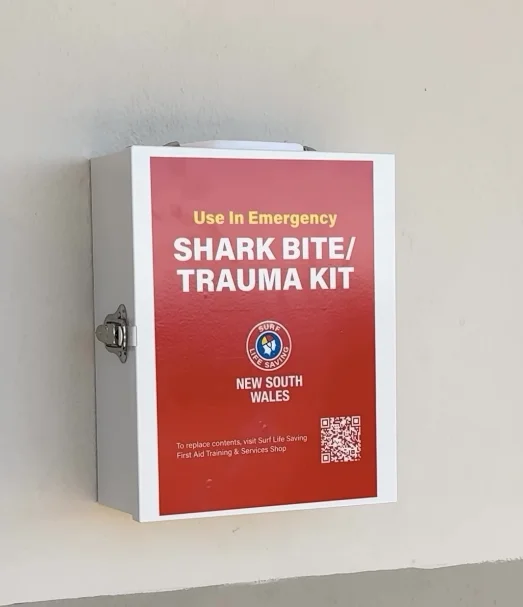
The rollout began at Dee Why Surf Club, a location closely connected to recent beach safety concerns on the Northern Beaches. Local surfer Mercury Psillakis, 57, died after a shark attack in September, and his death has been linked to renewed efforts to improve emergency readiness around surf areas.
Before the broader rollout, several shark bite kits funded through community donations had already been placed near surf clubs on the Northern Beaches after Mr Psillakis’s death.
Recent Attacks Bring Focus To First Response
The new kits follow several serious incidents along the NSW coast where fast first aid was a central factor in the emergency response.
In January, surfer Andre de Ruyter, 27, was attacked by a shark at North Steyne Beach in Manly. A makeshift tourniquet was used to reduce blood loss before emergency crews arrived. His injuries were severe, and his right leg was later amputated below the knee.
In November, Swiss tourist Lukas Schindler, 26, survived a bull shark attack at Crowdy Bay after a tourniquet was used. His girlfriend, Livia Mulheim, 25, was also attacked and could not be saved.
Surf lifesavers have also reported more shark sightings and beach closures in recent months than they had seen in the previous decade. During the recent summer, between six and 10 NSW beaches were closed on some days because of shark sightings.
Trauma Kits And Drones Expand Shark Safety Measures
The trauma kit rollout is part of a wider set of shark safety measures now being introduced around surf communities.
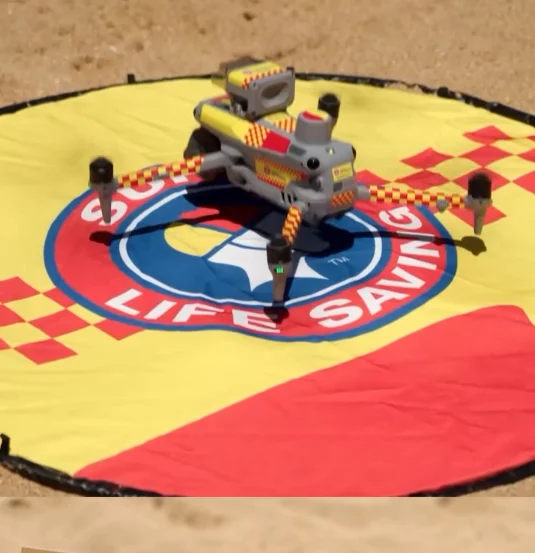
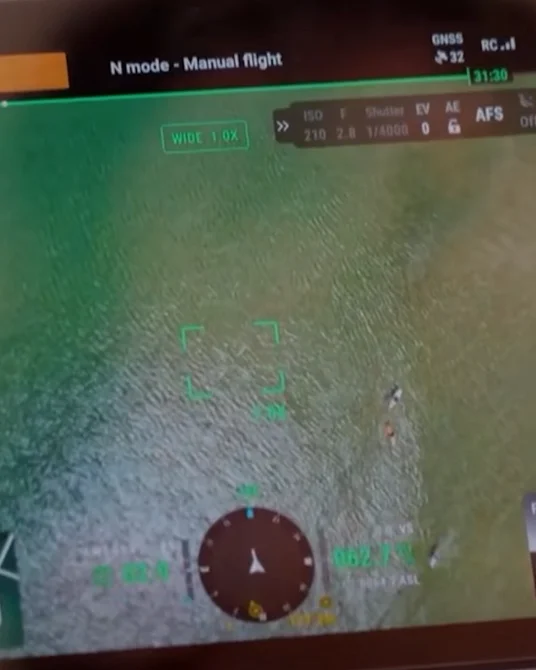
A separate drone program will train surfers to operate shark-spotting drones, with 60 new drones and training for 125 pilots. The drones will carry a tribute message in memory of Mr Psillakis.
The drone training is aimed at improving aerial surveillance at surf breaks, including during boardriding club events and training sessions. If a shark is seen during a club activity and no other local direction is in place, activity will be paused for at least 30 minutes.
The official volunteer lifesaving season has ended, although some beaches will still have lifeguard patrols. Beachgoers have also been reminded that shark attacks are more likely around dawn and dusk, when many beaches are unpatrolled.
The rollout places practical emergency equipment at a site closely tied to recent loss. Across NSW, the kits are intended to give the public another way to act quickly while waiting for trained responders to arrive.
Published 29-Apr-2026